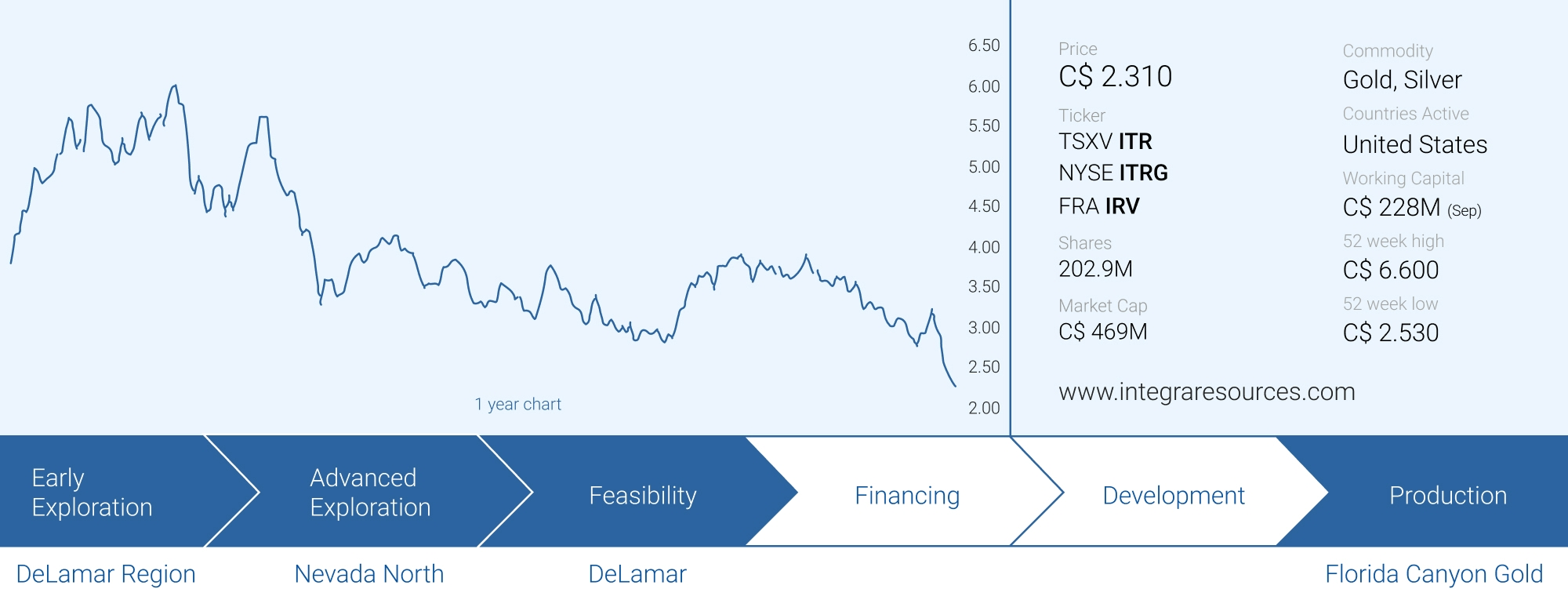
Integra Resources (ITR.V, ITRG) released the detailed operational results and the financial results of its third quarter last week. While the Q3 results were more than okay, the market was taken by surprise due to the implied substantial production guidance cut for Q4.
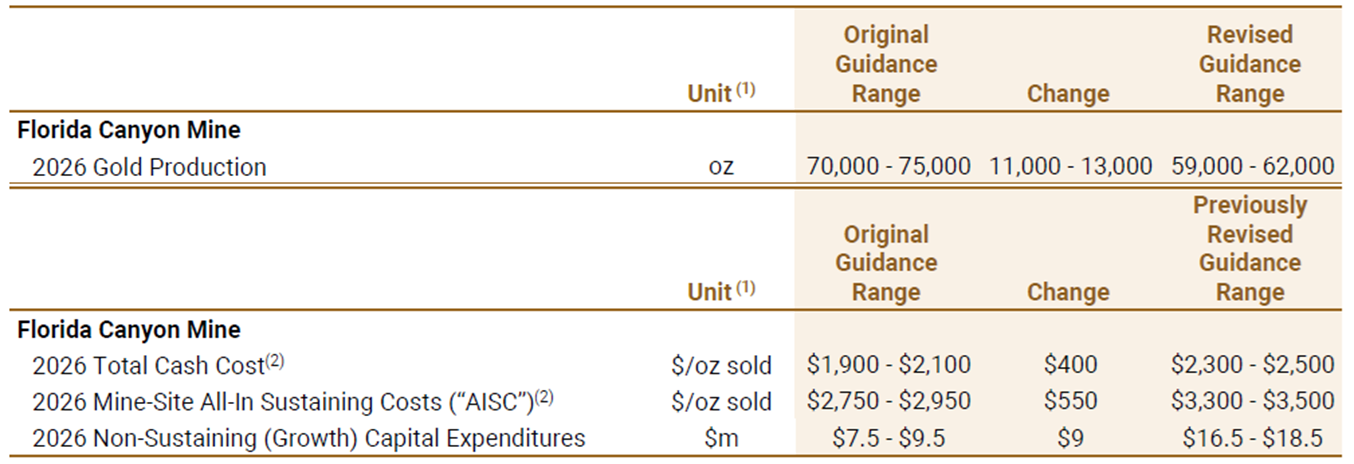
Integra has now reduced its full-year production guidance to 59,000-62,000 ounces of gold, which implies a total reduction of 11,000-13,000 ounces of gold produced this year. In this update we will review what happened, how this will be remedied in 2027, and how the current operating cash flow still handsomely covers all overhead expenses and G&A expenses.
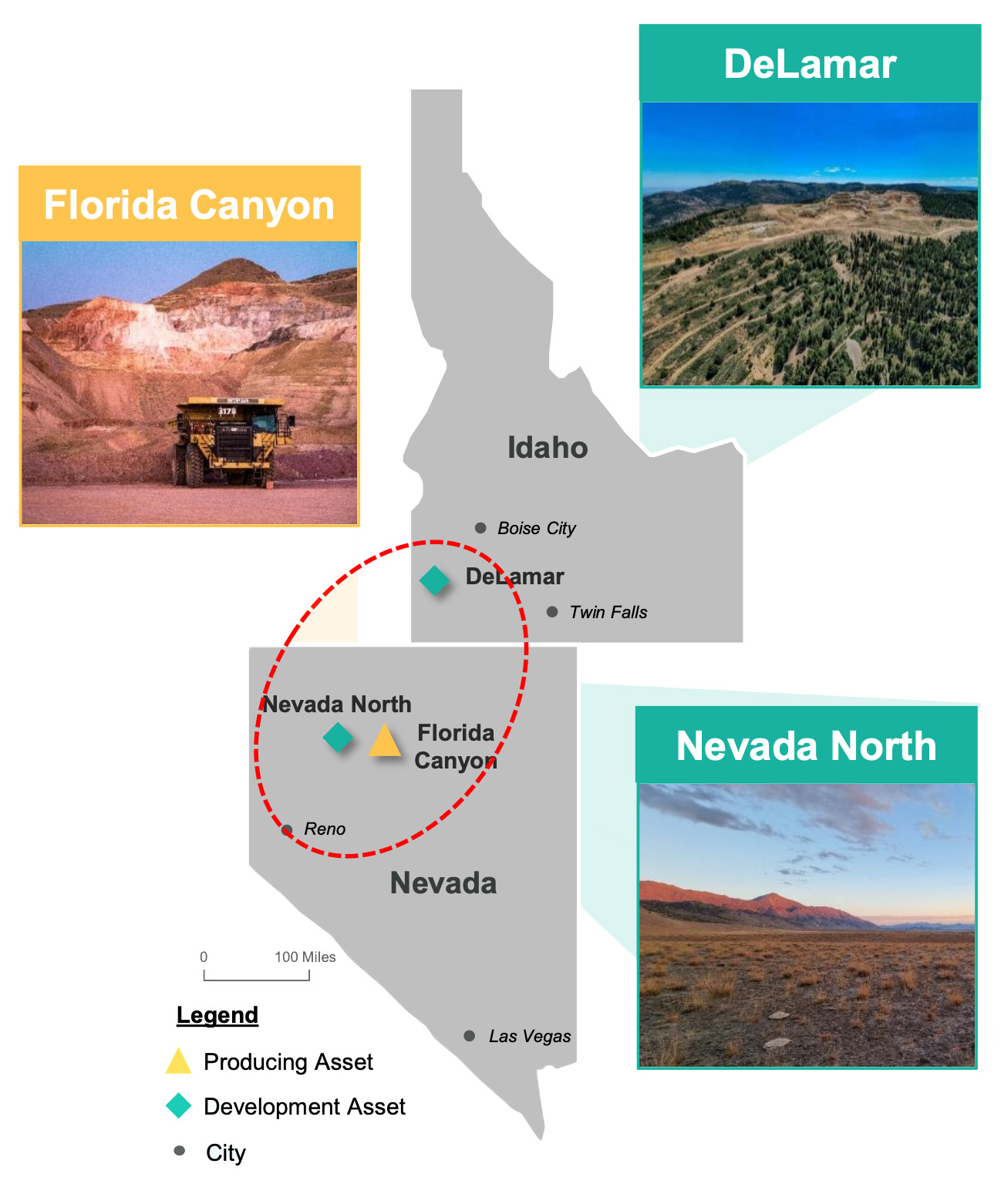
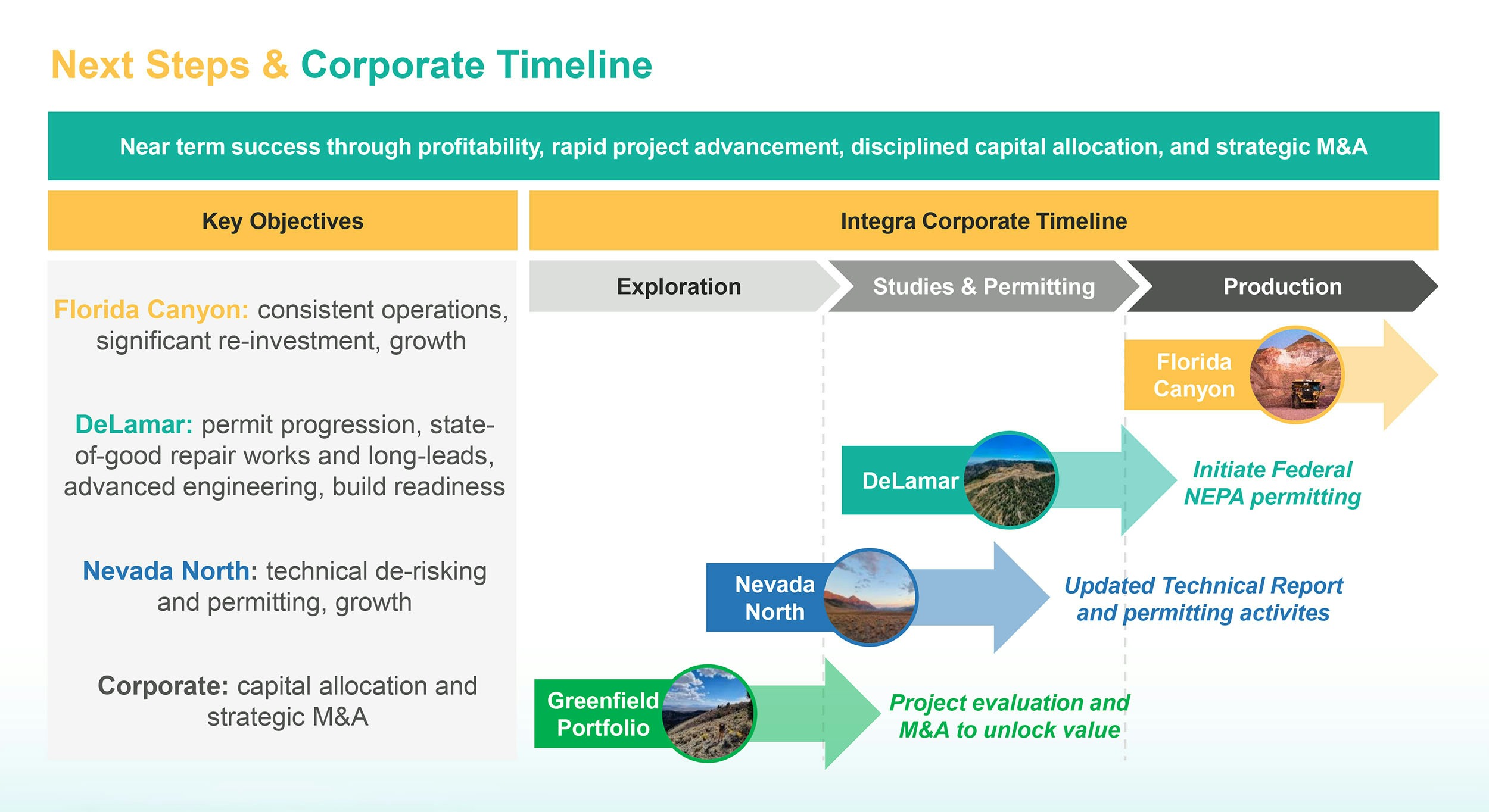
In the end, the big prize for Integra really is getting the DeLamar gold/silver project in Idaho permitted, financed and built. While the Florida Canyon cash flows are very meaningful and help to avoid dilution, the Nevada-based gold mine is just a ‘tool’ to get the company to where it wants to be further down the road: a mid-tier producer with three operating gold mines (Florida Canyon, DeLamar and Nevada North).
The lower full-year production guidance caused a sell-off
During the third quarter of 2026, Integra Resources produced just over 17,600 ounces of gold, of which 16,760 ounces were effectively sold at an average realized gold price of $4272 per ounce.
The Q3 production rate was quite robust, especially compared to the first quarter of the year, but unfortunately most of the attention was drawn to the rather sharp production guidance decrease. Whereas the company initially released a production guidance of 70,000-75,000 ounces, this was now revised downwards to 59,000-62,000 ounces of gold. The lower end of that guidance implies a Q4 production of approximately 12,300 ounces, while the upper end of the guidance implies an output of 15,300 ounces of gold.
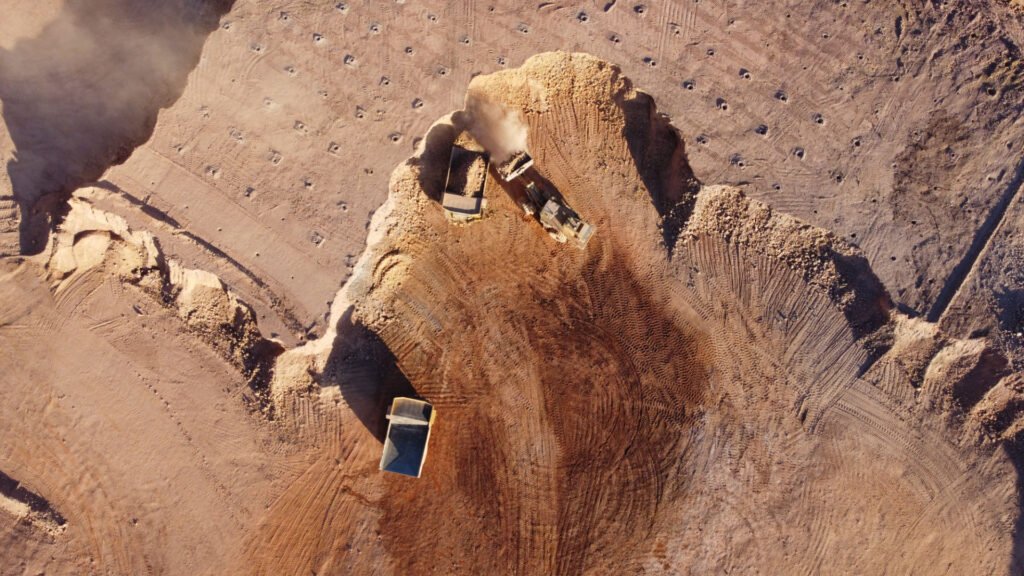
The reason for this guidance cut is the slower-than-expected leaching of the rock as the leaching rate has not kept pace with the higher mining rates. The Company has been mining record rates at Florida Canyon this year, driven primarily due to the lower grade ore mined while a deferred stripping campaign took place at the Central Pit, the location of higher grade ore on the project.
In Q1, Integra also implemented a blending strategy to address fine material encountered while mining. This blending strategy was refined and monitored throughout the year; however, recent operating performance showed that leach rates were slowing.
In order to protect the long-term performance of the heap leach pad, and ensure effective blending, the Company chose to reduce mining rates for the remainder of the year. This will allow the leach rates to stabilize. Now, it is important to note, the ounces have been stacked on the pad. They are not lost. The ounces are simply leaching slower and won’t be recovered in the quarter.
Additionally, the stripping activities at the Central Pit should be completed in the next few months, and the ore that will be placed on the leach pads in 2027 will predominantly come from mining that pit. Not only will this unlock access to higher grade ore to be placed on the leach pad, it also is our understanding these areas should contain a lower ratio of fines, which should help the leach kinetics.
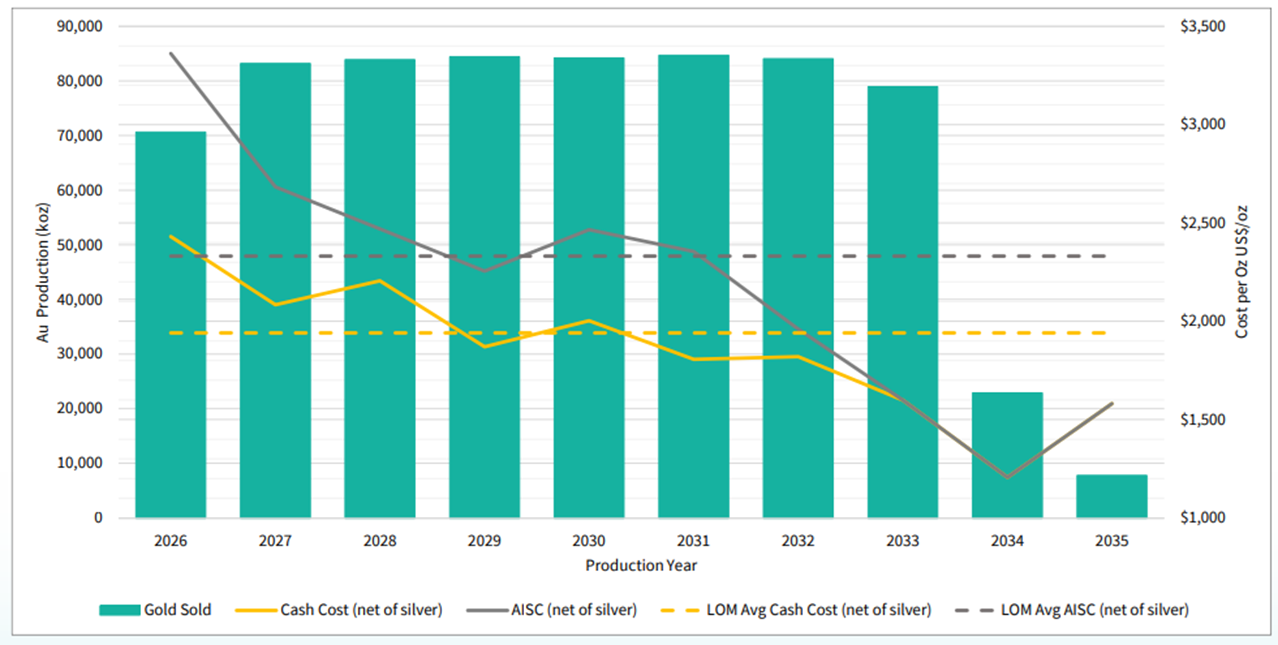
For now, it is encouraging Integra Resources hasn’t officially reduced the production expectations for 2027 yet. While the company hasn’t posted an official production guidance for 2027 at all, the recently filed technical report indicates we are to expect a production rate reaching in excess of 80,000 ounces of gold per year in Y2 after the effective date of the technical report. We hope to see clarification on this in the first quarter of 2027. We don’t want to get ahead of ourselves but for now it looks like the gold production (and lower production costs) will be heavily weighted towards the second half of 2027 when the Central Pit will provide higher grade ore with better leach kinetics. From what we understand, the Company is still targeting 75,000 to 80,000+ ounces as its production guidance for next year, despite the change in production guidance in 2026.


The Q3 cash flows were still strong
The total revenue came in at US$72.4M in the third quarter, which allowed the company to report mine operating earnings to the tune of $23.3M, and an operating income of $15.4M. This includes approximately $4.5M in expensed exploration.
Thanks to the very robust balance sheet with a net cash position, Integra Resources reported net finance expenses of just $0.15M, and those interest expenses are entirely related to the leased fleet, and the reclamation accretion expense and how that gets accounted for.
Integra remained profitable with a bottom line result of US$12.9M, for an EPS of US$0.064. Expressed in Canadian Dollars using an exchange rate of 1.40 CAD for every USD, this results in an EPS of just under C$0.09.
We also always like to have a look at the cash flow result as in the end, it’s the hard dollars that come in that ultimately determine how well a company is performing.
During Q3, Integra reported an operating cash flow of $21.8M, but this includes a $1.8M investment in the working capital position, while it also included only $575,000 in cash taxes versus the $2.2M in taxes owed, as indicated in the income statement. After also taking the $3.1M in lease payments and the $0.8M in cash interest income into account, the adjusted operating cash flow generated during the third quarter was approximately $19.6M.
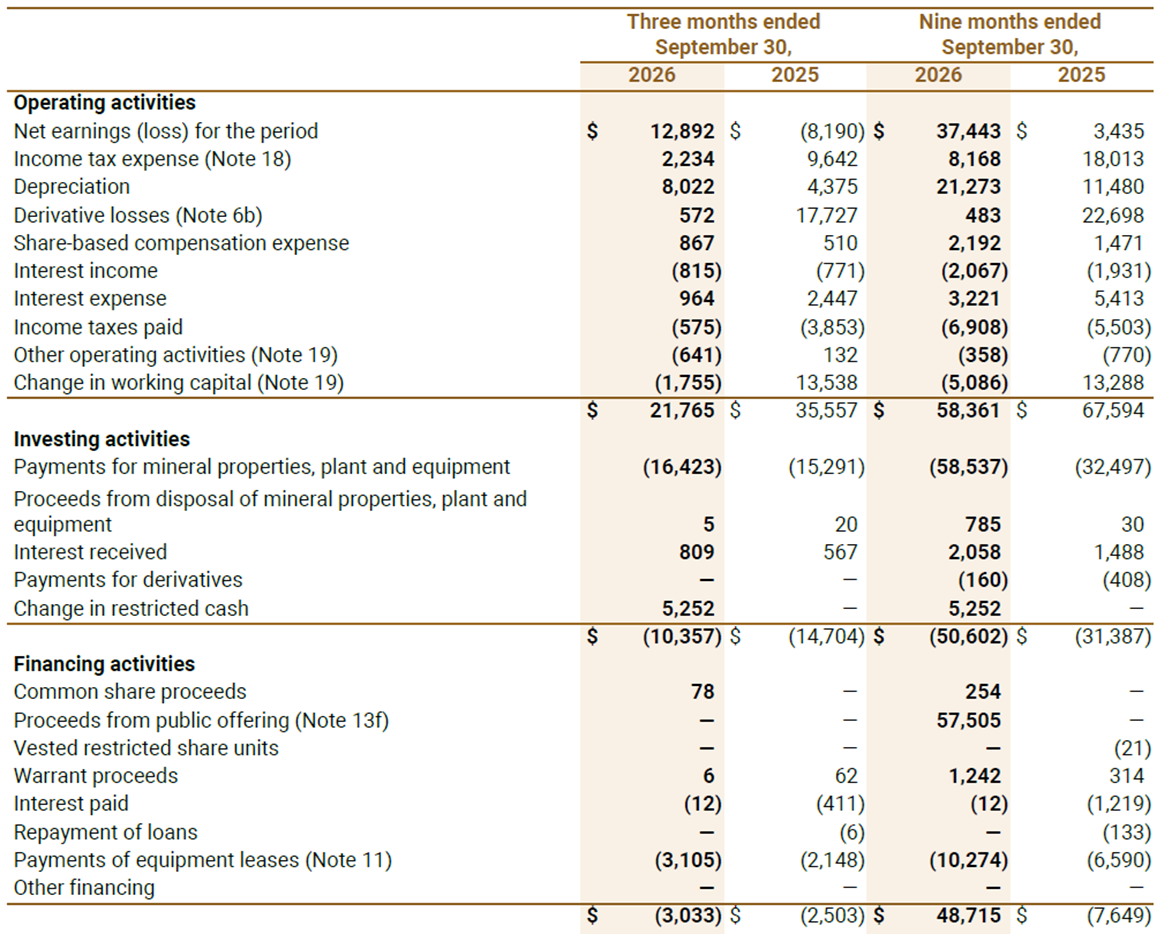
The cash flow statement also shows the company invested $16.4M during the quarter, and all those investments were fully covered by the incoming cash flow. So despite the high production cost with a cash cost of $2419/oz during the third quarter, Integra Resources was still fully self-sufficient.
Of the $16.4M in total investments, only $10.6M was classified as sustaining capex, which already represents a 30% decrease compared to the same quarter a year ago.
The long-term view remains intact
Integra Resources acquired the Florida Canyon gold mine to avoid having to go back to the market every year to raise money to fund the DeLamar development project. Florida Canyon has already earned itself back (the adjusted sustaining free cash flow in just the first nine months of this year was already US$20M+ despite still spending an above average amount on catch-up sustaining capex.
While the substantial production miss this year is never nice to experience, it’s perhaps better to get all the bad news out of the way now, and start 2027 (or at least the second half of 2027) with a clean slate.
While the Florida Canyon mine is a nice cash generator, the real prize here is getting the DeLamar project in Idaho permitted. Integra remains very active in Idaho as it spent approximately $9.6M on DeLamar in the third quarter, including $4.2M on permitting and engineering activities while a $2M cash deposit was made to secure long-lead items that would be required further down the road.
As a reminder, the DeLamar project is part of the FAST-41 process, which provides the company with great visibility on the timing of the permitting process, which should only take 15 months. As a reminder, at $3000 gold and $35 silver, DeLamar sports an after-tax NPV5% of US$774M, which jumps to US$1.9B at $4500 gold and $65 silver. While the gold price recently dropped below $4000/oz and the silver price is trading at just under $50 per ounce, it does show how much torque to the precious metals prices the DeLamar project offers.
We also still expect to see an updated technical report on Nevada North in 2027. That study should incorporate the higher precious metals prices into the economic case, while of course also taking the impact of inflation on the capex and opex into consideration. The 2023 preliminary economic assessment used a base case gold price of $1700/oz, and using $3000 gold or $3250 gold should result in a nice bump in the after-tax NPV5% and the IRR, notwithstanding the inflationary effects.
Conclusion
We had hoped 2026 would have been the last ‘difficult’ year for Integra before moving into a new era with a lower sustaining capex and a higher production rate, but the issues with the leach kinetics may spill over into H1 2027. The situation should improve once the company gets to mine the higher grade Central Pit, which should solve the issues due to A) the higher grade nature of the ore and B) the lower level of fines.
Florida Canyon is important to the company, but it is also just a tool to help fund the development of the DeLamar gold project in Idaho (of course subject to completing the permitting trajectory). The long-term thesis for Integra Gold remains intact, and although the guidance cut is disappointing, we are operating under the assumption this is a temporary headwind and the increased ratio of Central Pit and Radio Tower ore on the leach pad from H2 2027 on will put the project back on track to generate a meaningful free cash flow.
Disclosure: The author has a long position in Integra Resources and recently bought more shares on the open market. Integra Resources is a sponsor of the website. This post is for educational purposes only; be mindful investing in junior mining stocks is risky and you may lose your entire investment if things go wrong. Please read the disclaimer.