Canterra Minerals (CTM.V) has made true on its promise to update the resource on the Lundberg deposit, part of its flagship Buchans critical minerals project. While a resource increase was widely anticipated, the burning question was of course ‘by how much’.
That question has now been answered with a high-confidence resource update with 97% of the global tonnage at Lundberg in the indicated resource category with barely any inferred resources. The tonnage increased by 55%, the total amount of copper-equivalent increased by 34% and this percentage would have been higher if it wasn’t for the very strong copper price which has a mildly negative impact on the copper-equivalent calculation. This updated resource now positions Buchans as a high-priority critical minerals project in Newfoundland, providing a welcome change from the gold-dominant exploration stories in the province.
The long-anticipated resource update at Buchans
CEO Chris Pennimpede had promised the market to release an updated resource calculation after the summer, and it is good to see the company has now indeed published the results of a new resource calculation, which includes almost 4,800 meters of additional drilling since the project was acquired.
And although the total amount of additional drilling incorporated in this resource (drilling is ongoing, so we can expect more news and additional updates in the future) is relatively small, it did have a noticeable impact. And of course, the updated metal price deck also had an impact as although the NSR-value based cutoff for the mineral resource increased when expressed in dollars, this implies a slightly lower cutoff grade expressed in a percentage of the copper-equivalent basis.
As the table below indicates, Canterra Minerals’ Buchans project now contains just over 26 million tonnes of rock in the indicated resource category and a rather marginal additional 870,000 tonnes in the inferred resource category. It goes without saying it is very encouraging to see a high-quality resource estimate with virtually the entire Buchans resource ending up in the indicated resource.
Copper remains the dominant metal. Although it certainly is a polymetallic deposit – which justifies using a copper-equivalent grade – the 0.87% CuEq is justified as in excess of 40% of the copper-equivalent grade indeed consists of copper. Zinc (1.31%) is the most important secondary metal (fortunately zinc is also seen as a critical mineral, as per the official Canadian list), as are lead (0.56%) and silver (5.02 g/t) while gold only plays a very minimal role with just a handful of ounces thanks to its ‘trace-style’ grade of 0.06 g/t.
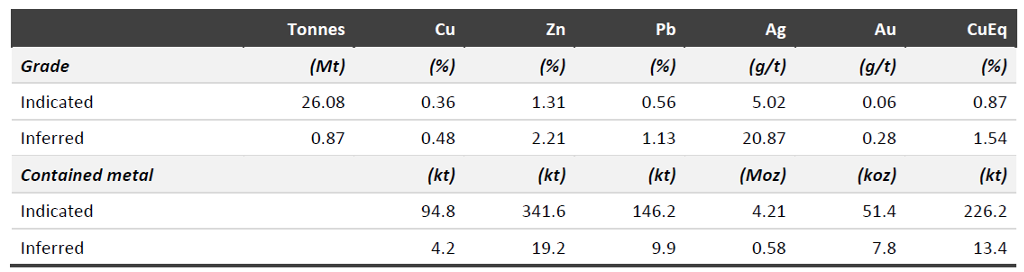
As the table above shows, this represents a total copper content of approximately 210 million pounds, with an additional 750M+ pounds of zinc and north of 300 million pounds of lead. Silver (4.2 million ounces) and gold (51,000 ounces) are nice to have, but clearly pay a secondary role in the metals mix. Not in the least because the recoverable and payability percentages for the precious metals (just under 66% for the silver as a portion of the silver reports to the zinc concentrate where it gets penalized, and 23% for the gold) are somewhat disappointing. With a recoverable and payable silver resource of 2.8 million ounces of silver and about 12,000 ounces of gold in the indicated category, it is clear the base metals are important here. Note: these recovery rates and payability percentages are already included in the copper-equivalent grade, so you should not be alarmed by these percentages; the cutoff grade and the copper-equivalent calculation are already taking these elements into consideration.
While we still have to wait for the technical report to be filed, the press release with the ‘first look’ is already very detailed, as the company has included detailed tables comparing the 2019 resource to the 2026 updated resource.
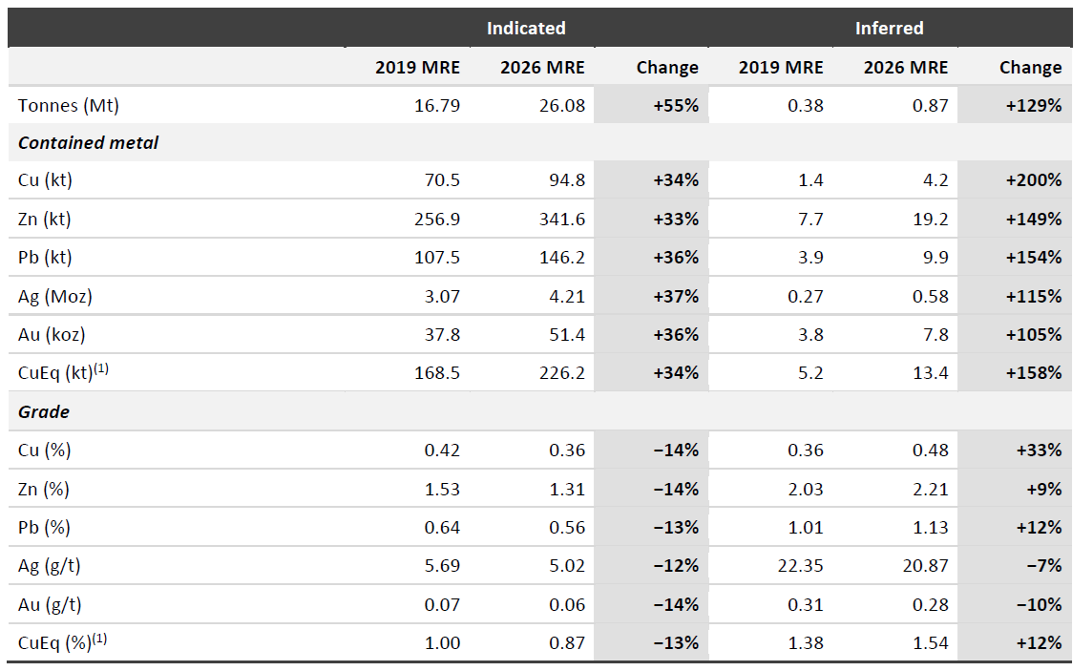
The table above provides a detailed overview of the changes, and the less than 5,000 meters of drilling incorporated in this update have generally increased the total amount of contained metal by about a third.
Not only did the resource expand (both in terms of tonnage as well as pounds and ounces), the pit-constrained resource has an average strip ratio of just 3.16:1 (indicating that for every tonne of mineralized rock, 3.16 tonnes of waste will have to be scooped up).
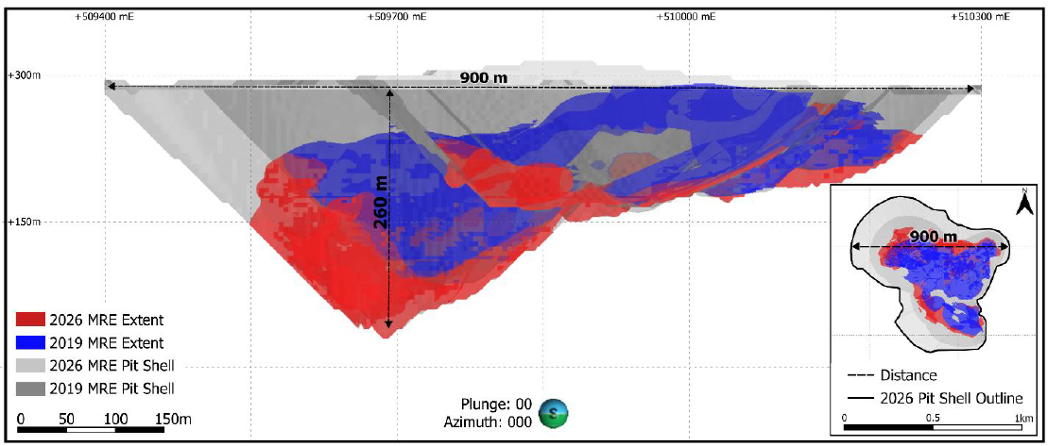
The image above shows the consistency of the pit-constrained mineralization, and we would expect the strip ratio to be relatively low in the first few years of a potential mine life (subject to completing a positive economic study), and increasing as the activities move towards the west where the mineralization is located a little bit deeper.
The meaning of recovery rates and payability percentages
Although preliminary in nature, the parameters used to determine the cutoff grade for the resource calculation do provide a useful first look under the hood. The independent consultants used a mining cost of US$3.60/t for mineralized rock and US$3/t for waste, processing costs of US$18/t and G&A expenses of US$2.40/t.
We also know the recovery and payability percentages, and this allows us to calculate the pro forma margins based on the available parameters. Please note: the company does not have an official economic study, and our numbers and calculations should just be seen as an explanation on how to interpret all available data. The only thing that will matter down the road will be the result of an official economic study on Buchans.
We have compiled these in the following table:
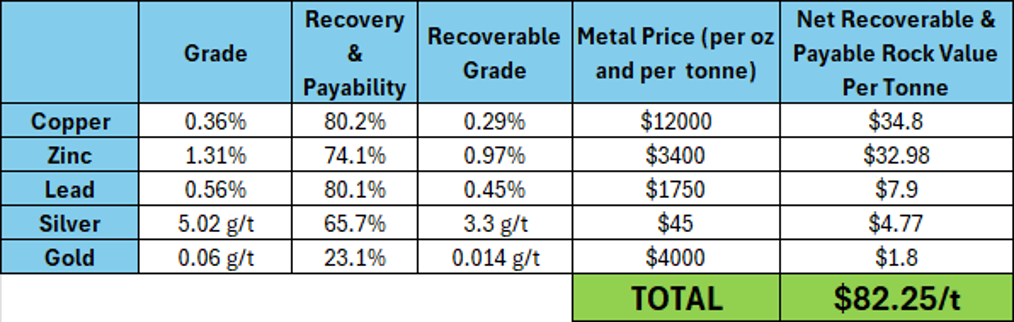
Taking all these parameters into account (and hopefully the company can improve on the recovery rates of the metals), the indicated resource category yields a net recoverable and payable NSR of $82.25 per tonne of rock.
Knowing the average production cost will be $3.60 + 3.16 * $3 + $18 + $2.4 = $33.48, the margin at the aforementioned metal prices and recovery and payability percentages comes in at almost US$49/t with likely higher margins in the first year of the potential mine life given an anticipated lower strip ratio.
Again, these calculations are just an example and should just be seen as an explanation of the impact and meaning of the recovery rates and payability percentages, and why this matters in the greater scheme of things. And determining the margin per tonne of rock will help to determine the general economic viability of the project further down the road when the company is ready to work on a preliminary economic assessment. Before that happens, Canterra will also complete additional metallurgical test work to narrow down its processing options and find the best approach for Buchans.
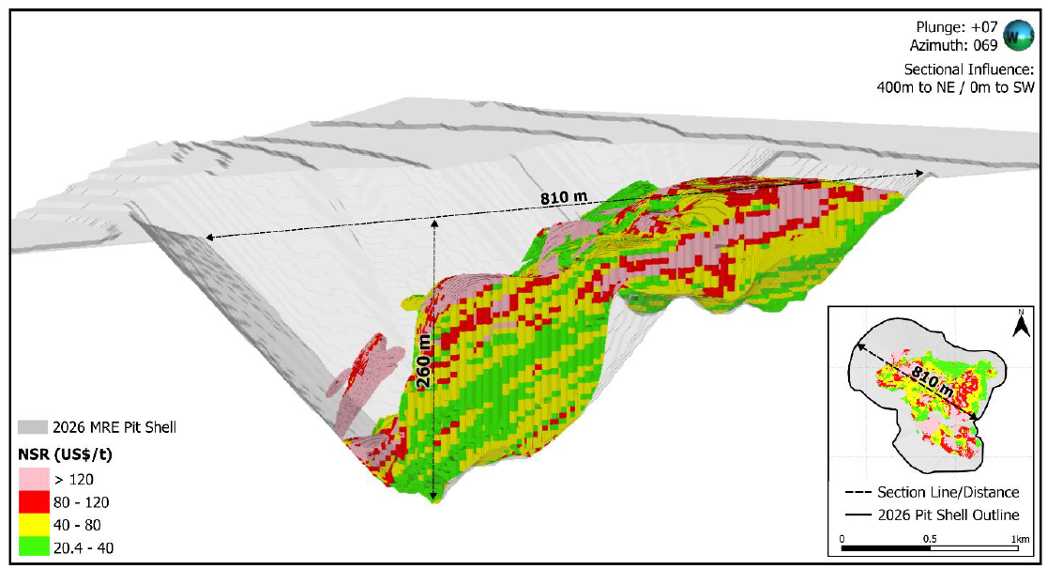
And of course keep in mind the table with the net recoverable and payable calculation is based on the average resource grade. As the image above shows, the NSR is substantially higher in certain areas of the deposit, and especially the >$120/t NSR blocks close to surface are particularly interesting to boost the margins per tonne in the first few years of a potential development scenario. But again, all this will have to be determined and confirmed in an economic study to be completed further down the road by the independent consultants.
What are the next steps?
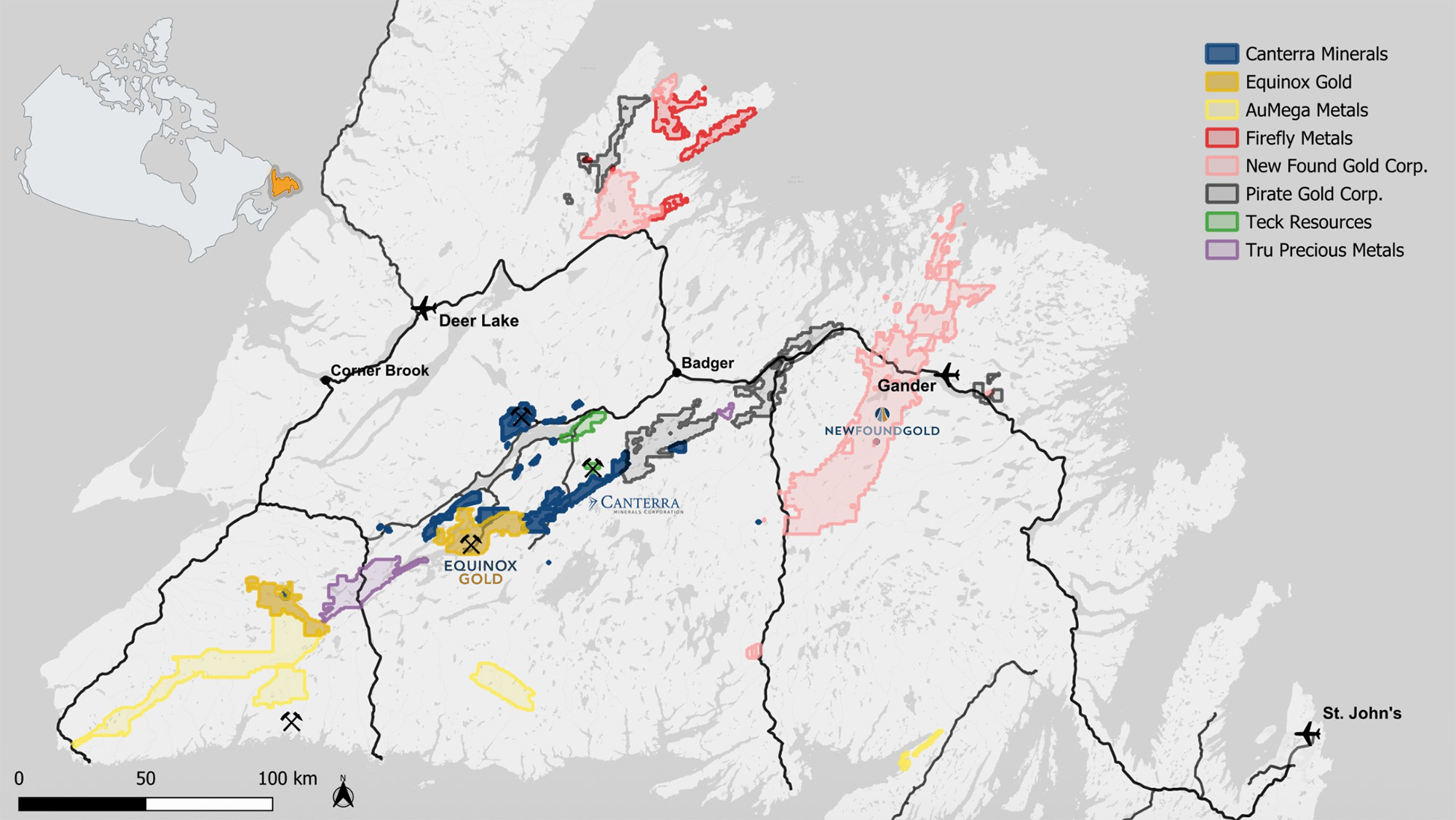
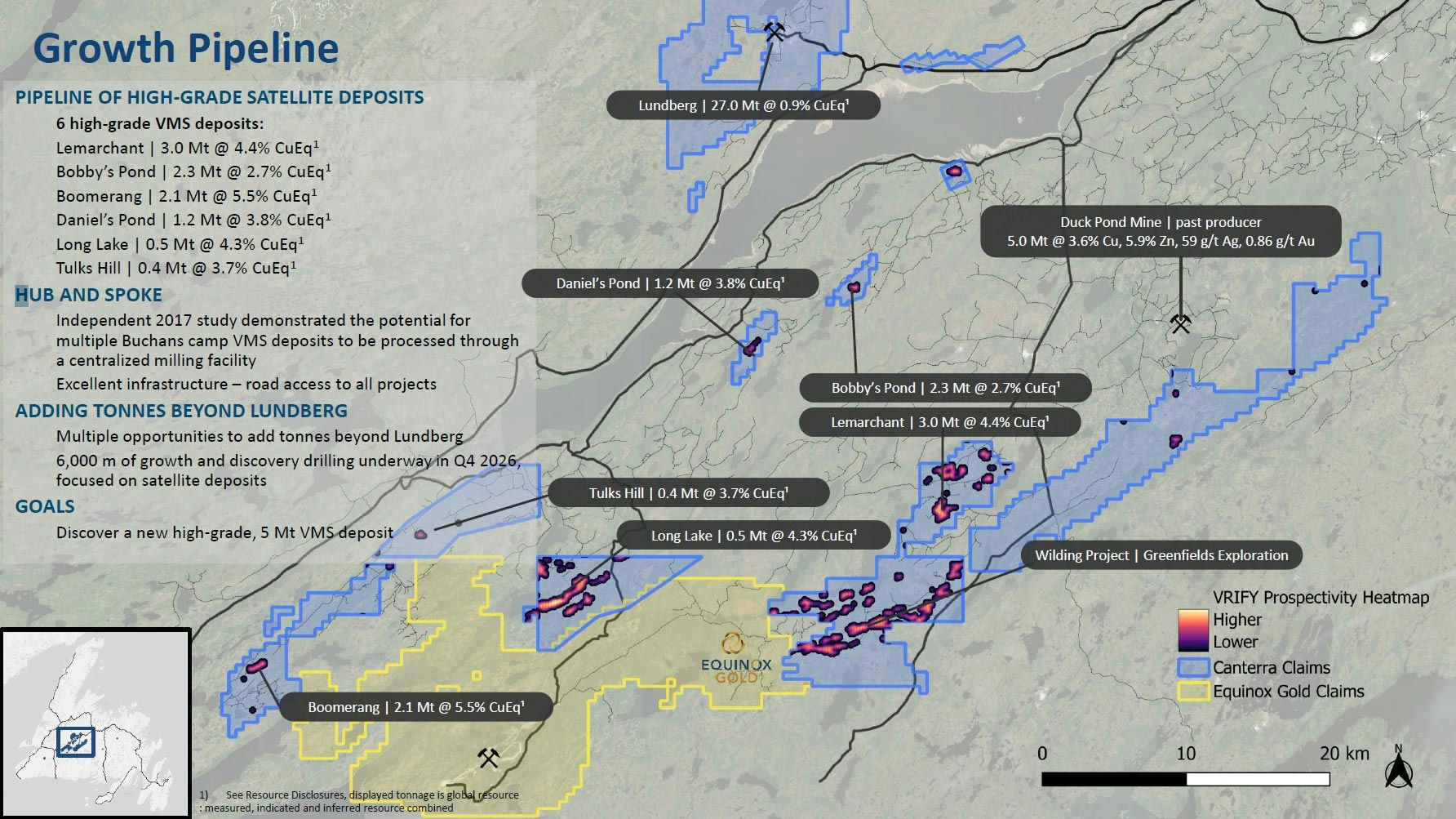
The Lundberg deposit is the largest but also the lowest grade prospect in the Buchans critical minerals district. We anticipate it will ultimately be the company’s goal to combine the lower grade Lundberg deposit with rock from higher grade zones elsewhere on the property.
Concurrent with the Lundberg indicated resource calculation, Canterra also released the maiden resource on the Two Level zone, an area directly adjacent to the updated pit-constrained resource (see below).
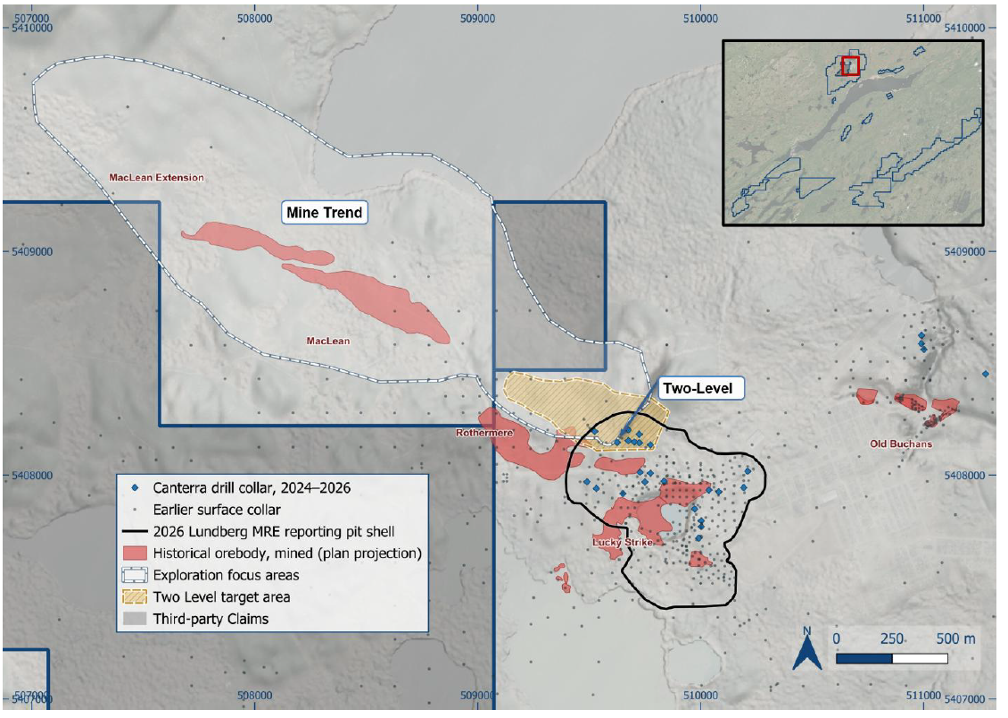
While the tonnage in this maiden inferred resource is nothing too exciting (870,000 tonnes), it is worth highlighting the average grade of this zone is almost twice as high as the average grade in the Lundberg deposit. As you can see below, the Two Level zone is steeply dipping on the northwestern edge of the pit outline, and could provide higher grade material later in the mine life.
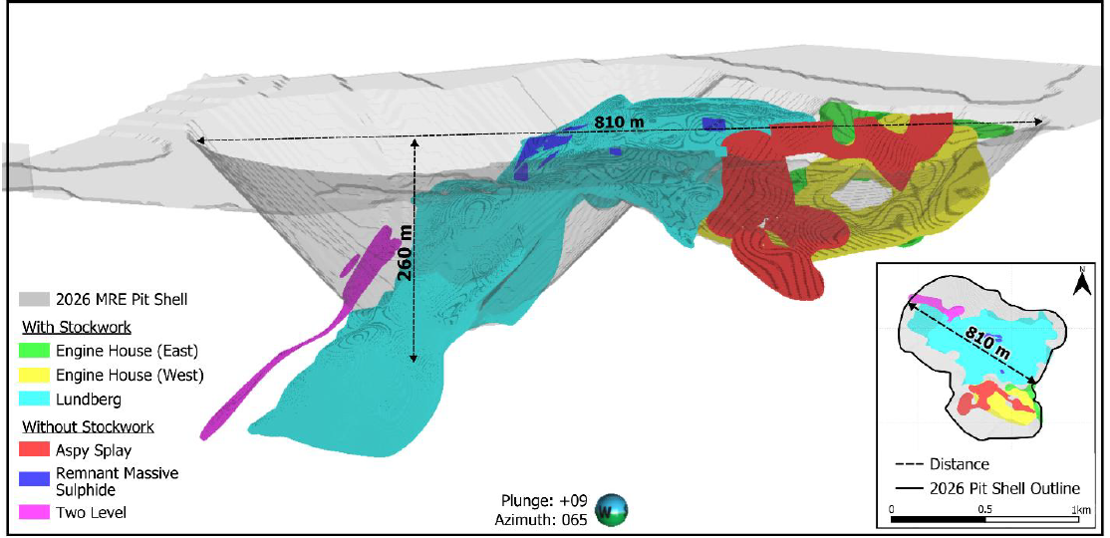
The Two Level Zone also provides some low-hanging exploration potential and recent drill results further highlight the potential along strike and at depth. And given the exploration success at Two Level, the company will be trying to replicate that elsewhere in the district where previously mined zones can be re-assessed with renewed interest and an updated approach.
As such, we consider the Lundberg resource update just the starting point and a first milestone for Canterra since it acquired the project in 2024. There is plenty of more work to be done, not just at Lundberg and the Two Level Zone, but also in the greater Buchans district where the ‘mine trend’ (previously mined) is becoming a higher priority exploration target as the Two Level exploration approach could be replicated to see if more mineralized zones could be found.
A drill program – part of the 6,000 meter district exploration program – is currently underway at the Lemarchant satellite deposit which currently hosts a historical resource of 3 million tonnes (2.4Mt indicated, 0.6Mt inferred) at an average grade of 4.4% copper-equivalent that was put together in 2018. Assay results should start to flow soon and this will likely continue well into 2027.
Conclusion
The Lundberg resource update is an important milestone, but it also is just the very first step of advancing the entire Buchans critical minerals district. Having 26 million tonnes in the indicated resource category at Lundberg and completing a maiden inferred resource at Two Level is a good starting point to continue to advance the regional prospects and projects.
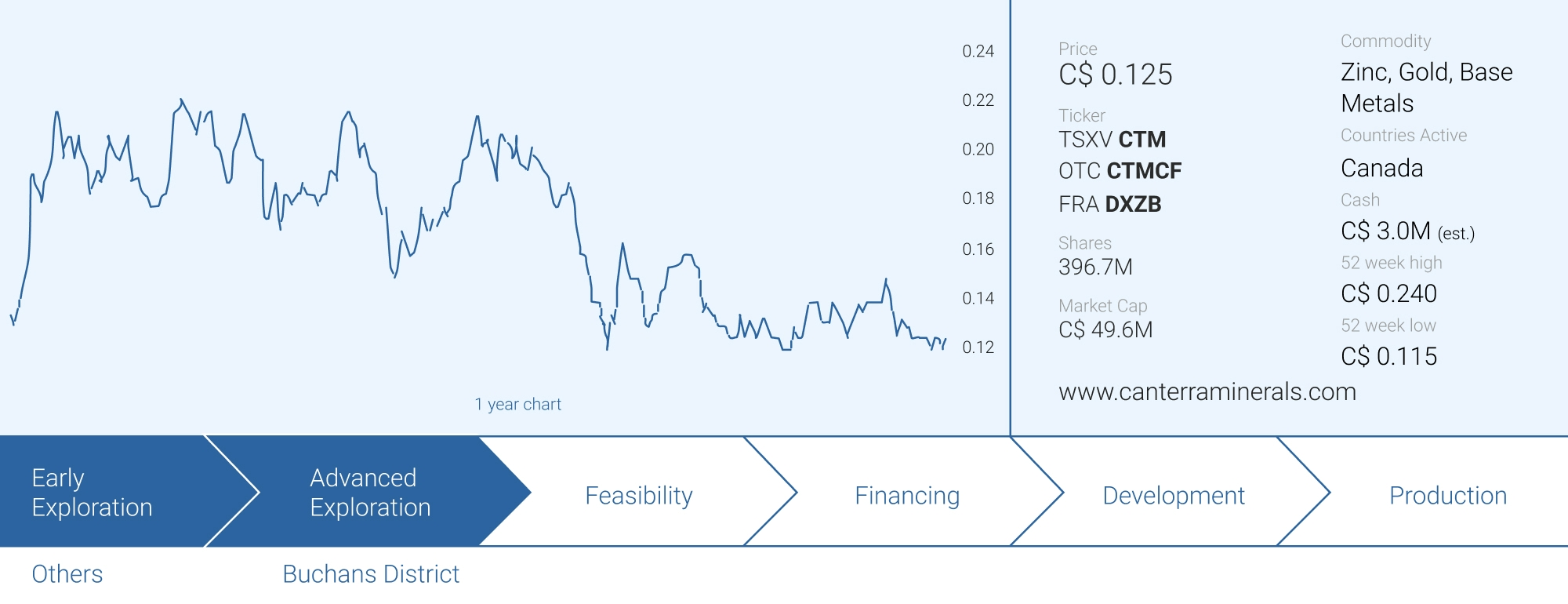
The company still has approximately C$3.0M in its treasury, which should see it through the current drill program. And as we are nearing the ‘flow-through’ season, perhaps a good financing window to place flow-through shares at a substantial premium to the current share price could pop up, allowing the company to secure the budget for next year.
Disclosure: Canterra Minerals is a sponsor of the website. The author has no position in Canterra Minerals. This post is for educational purposes only; be mindful investing in junior mining stocks is risky and you may lose your entire investment if things go wrong. Please read our full disclosure.