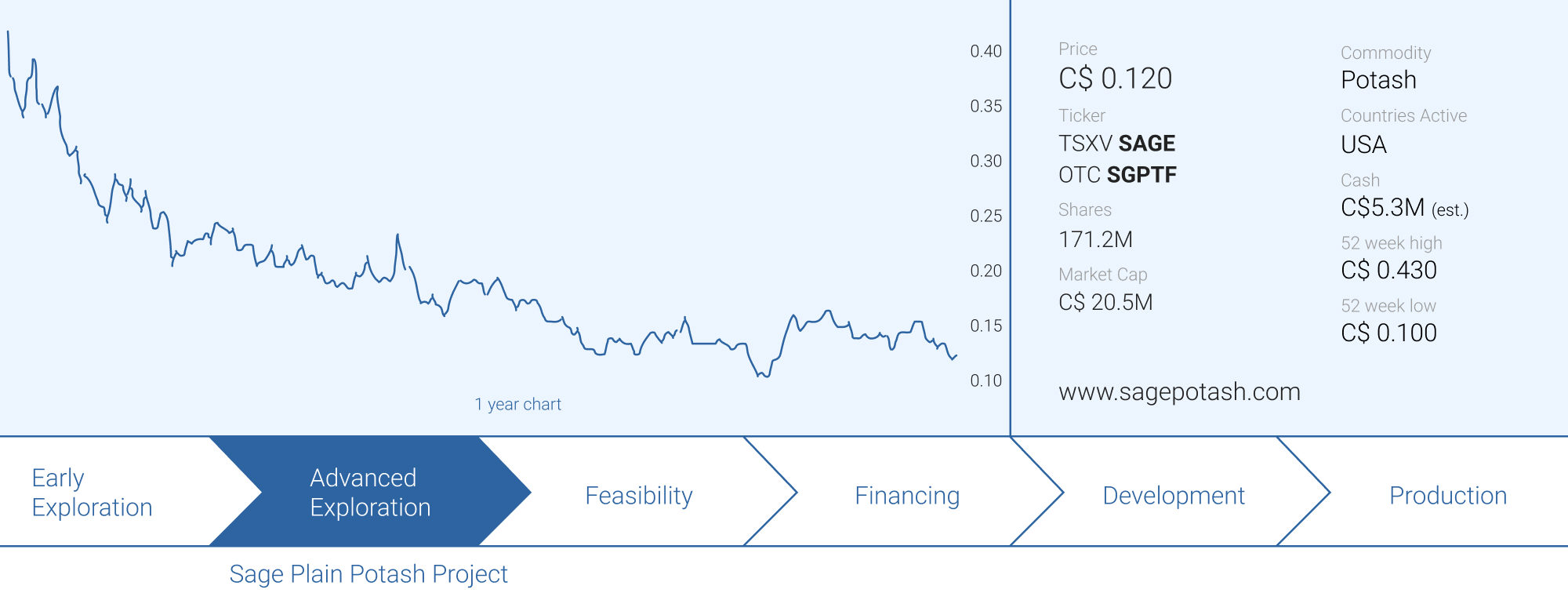
Sage Potash (SAGE.V) released the long-awaited assay results from the Peterson 1 hole last week, and it is very encouraging to see the hole intersected the expected mineralization. Not only is it great to see the average thickness of the two potash beds of Cycle 18 being confirmed (with minimal variability), the grades are also coming in as expected, with a higher grade zone running 52-52.5% KCl beating the expectations.
This hole should enable the company to continue to tick the boxes at the flagship Sage Plain project in Utah. We caught up with CEO Pat Varas to discuss the results and the near-term plans for the project. As one of the most advanced development-stage potash projects (with an economic study) in the USA, updating the resource and the economics should further add credibility to the project. This would position it as one of the largest (if not the largest) potential Stateside potash development project.
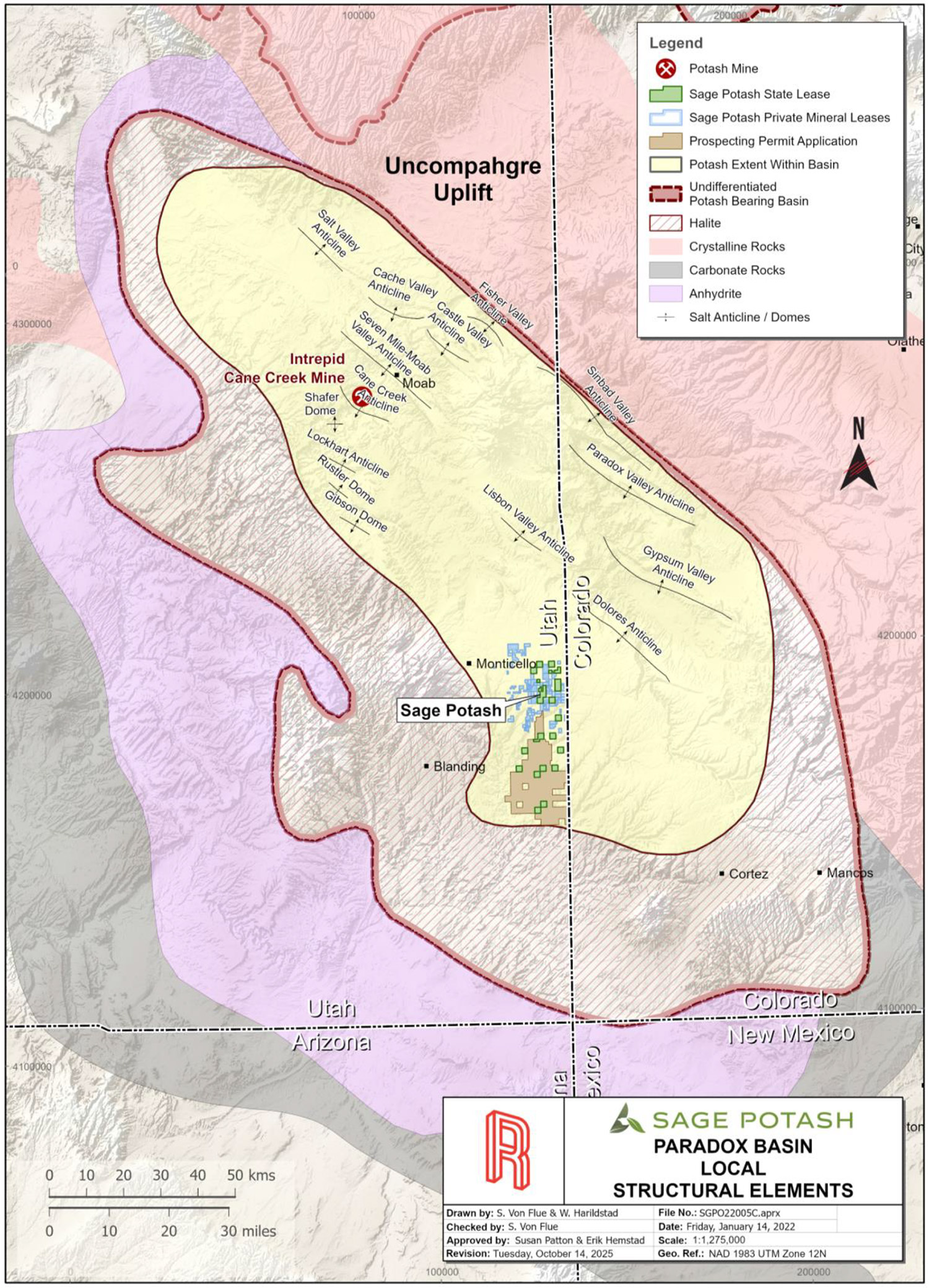
The assay results of the Peterson 1 hole confirm the continuity and high-grade nature of the Sage Plain Potash project
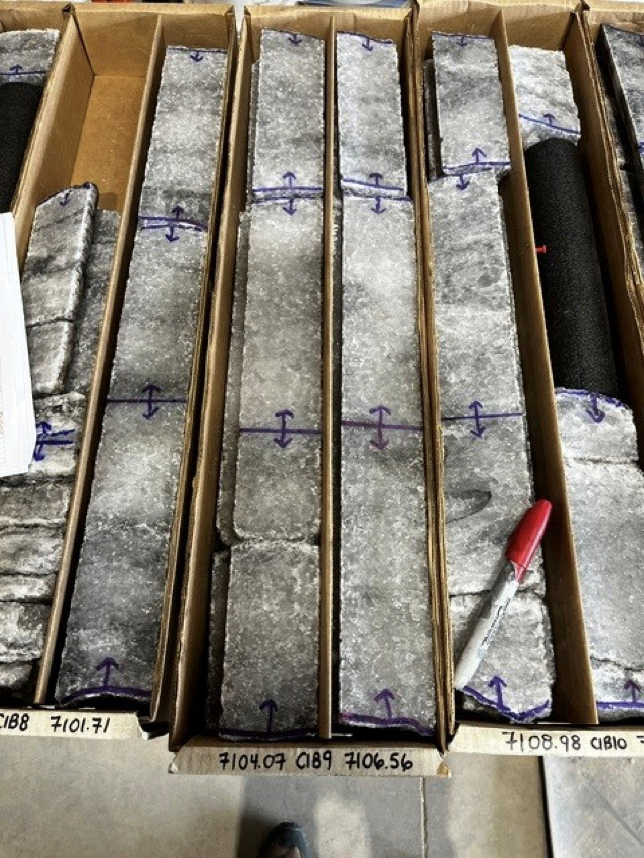
The main purpose of the Peterson 1 well was to confirm the presence of potash mineralization in the two Cycle 18 beds . The Peterson 1 drill site was 1km to the north of the previous hole drilled know as Johnson 1 The hole was very successful as it encountered 8.1 meters of 36.1% KCl in the upper bed and 5 meters of 36.4% KCl in the lower cycle 18 bed.
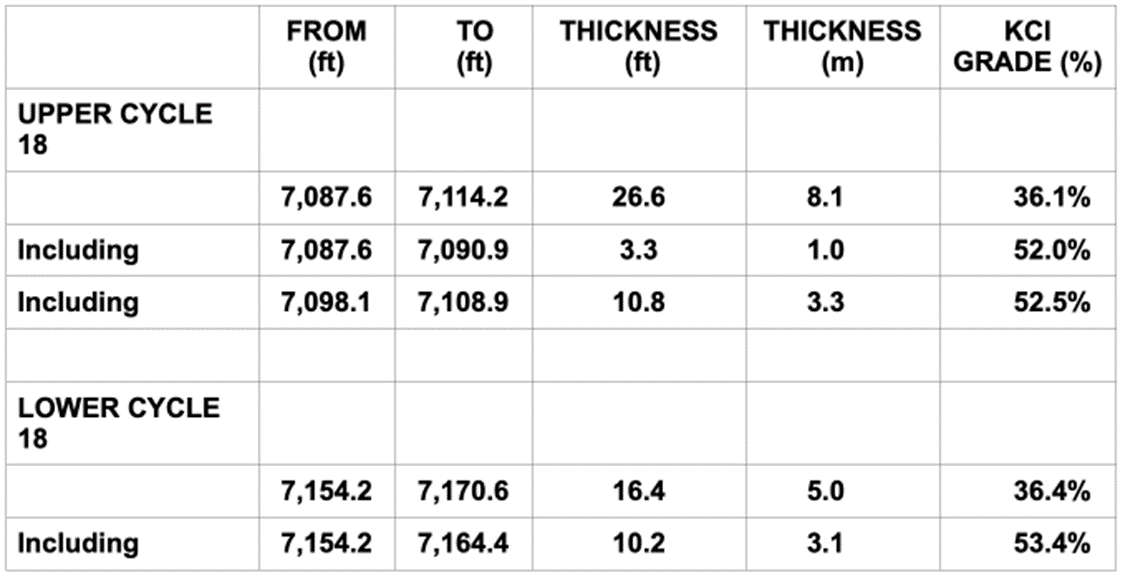
As the table above shows, the upper cycle contained two separate intervals of even higher grade mineralization with 1 meter of 52% KCl and 3.3 meters containing 52.5% KCl. That’s important, as this could pave the way to focus on selective mining methods to target the higher grade mineralization earlier in the mine life.
The key takeaways from the Peterson 1 well are the consistency of the mineralization as the grades and thickness of the potash mineralization is comparable to Johnson 1, about a kilometer away.
Let’s also not forget encountering a grade of 52% KCl is absolutely excellent. Peer Intrepid Potash (which currently trades at an enterprise value of US$250M) is currently producing from a resource with an average grade of just under 40% KCl. So 36% could be seen as ‘the norm’, but encountering grades like 52% KCl is absolutely excellent.
What’s next?
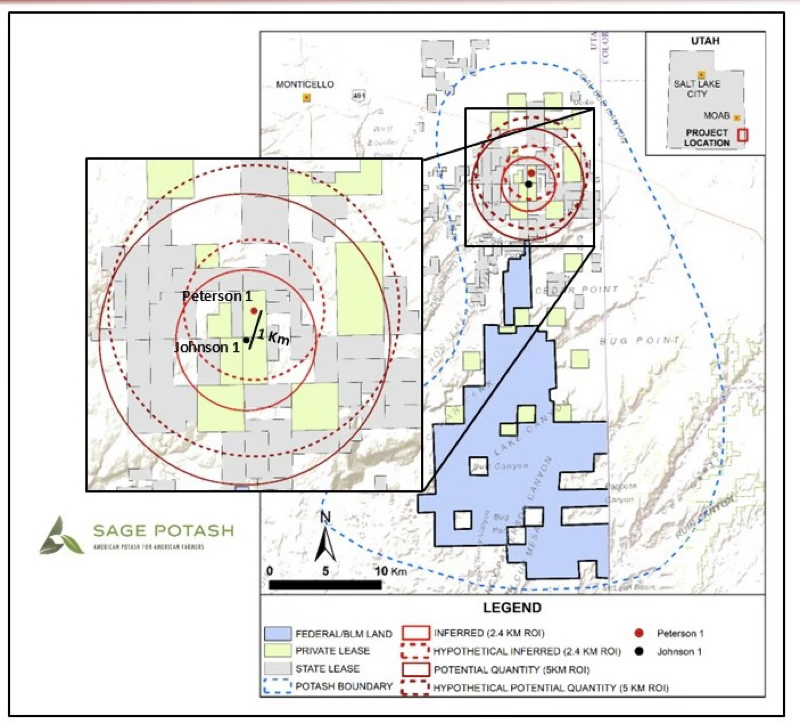
The assay results of the Peterson 1 well will now be combined with the data from the Johnson 1 well, along with previous obtained 2-D seismic and geophysical logs from earlier oil and gas sector drilling, to deliver an updated resource calculation While not a firm guidance, Sage Potash has widely publicized it anticipates a resource expansion, and as the Peterson 1 well was drilled approximately 1 kilometer from the Johnson 1 well, the continuity of the mineralized cycles should indeed allow for a substantial resource update.
Additionally, given the location of Peterson 1 and Johnson 1, there is quite a bit of overlap in the so-called ‘radius of influence’ and this should hopefully allow the independent resource calculators to move tonnage surrounding the two wells (1km step-out) from the current inferred resource into the measured and indicated resource category. Additionally, with two holes drilled relatively close to each other, the radius of influence could be expandedas an increased number of consistent data points generally means more scientific confidence. As we discussed in a previous report, the NI43-101 technical report also included the ‘potential quantity radius of influence’ which incorporates a 5,000 meter radius, defining an additional target of 550-700 million tonnes (including up to 530 million tonnes in the Johnson 1 vicinity, and up to 166 million tonnes close to the historical natural gas well), based on one well. Now there are two wells that have successfully intersected the potash mineralization, we anticipate the independent resource modelers to expand the inferred radius of influence, perhaps not to 5,000 meters but an expansion to 3,000 or 3,500 meters could be justified.
While we have to wait for the updated resource to be published (which shouldn’t take long, and we expect to see the announcement within the next few weeks) to quantify the resource increase, it is quite likely to be a meaningful increase and upgrade.
Subsequent to publishing an updated resource, we anticipate the company to immediately work on an updated economic study. That pre-feasibility study should incorporate the higher total resource estimate into an updated mine plan. CEO Patricio Varas has been quite vocal about wanting to increase the scope of the project and the 300,000 tpa base case operation as per the Preliminary Economic Assessment will likely be sharply increased as well. Again, we will have to wait for the pre-feasibility study to be published (likely sometime in the summer of 2027), but Sage’s intentions are clear: it wants to work towards a substantially higher production rate, and a rate of 1-1.5 million tonnes of potash per year would be ideal, as it will also allow Sage to capture economies of scale and efficiency benefits.
The USA imports in excess of 95% of the 10-11 million tonnes of potash it needs per year, and it would be nice if Sage Potash could help the country to reduce its reliance on imported potash products.
As drilling a 2,248 meter deep hole doesn’t come cheap and likely has cost between US$4-5M, Sage Potash will likely be tapping the markets later this quarter. Hopefully this can happen on the back of a substantial resource increase, which would give investors more confidence in the corporate strategy to design what could be the largest producing potash mine in the USA. Intrepid Potash currently produces approximately 300,000 tonnes per year and the development plans of privately-held Michigan Potash are focusing on an output of 800,000 tonnes per year. So if the Sage pre-feasibility study in 2027 will zoom in on an output exceeding that number, it would potentially become the largest domestic potash project in terms of output.


Conclusion
Ever since Patricio Varas took the reins at Sage Potash, the company has been diligently ticking the boxes that are required to bring the project forward. Having completed the second hole and successfully intersecting the potash mineralization where expected adds additional credibility to the project, and this should result in a substantial resource increase.
That updated resource calculation should be out pretty soon, so we will soon see how many tonnes have been added to the total resource, and what percentage of the total resource base will be part of the measured and indicated resource categories.
While the company will need to raise cash, it should be somewhat smooth sailing towards the completion of a pre-feasibility study on the operational level. Sage Potash will decide on the preferred mining method to ensure the most optimal choice will be selected, and this should culminate in the publication of a pre-feasibility study, hopefully around the summer of 2027.
Sage Potash is aggressively advancing the Sage Plains potash project, putting it on the map as one of the largest undeveloped potash projects in the USA. The pre-feasibility study will likely also confirm it could be the largest US-based potash development project based on anticipated production rates, as Sage has been pretty vocal about targeting a higher production rate than the 300,000 tonnes per year shown in the preliminary economic assessment.
It looks like the market still doesn’t fully appreciate Sage Potash’s asset, but hopefully the pending resource update and pre-feasibility study will kindle the interest in what could be the largest potash development project in the USA.
Disclosure: The author has a long position in Sage Potash. Sage Potash is a sponsor of the website. This post is for educational purposes only; be mindful investing in junior mining stocks is risky and you may lose your entire investment if things go wrong. Please read the disclaimer.