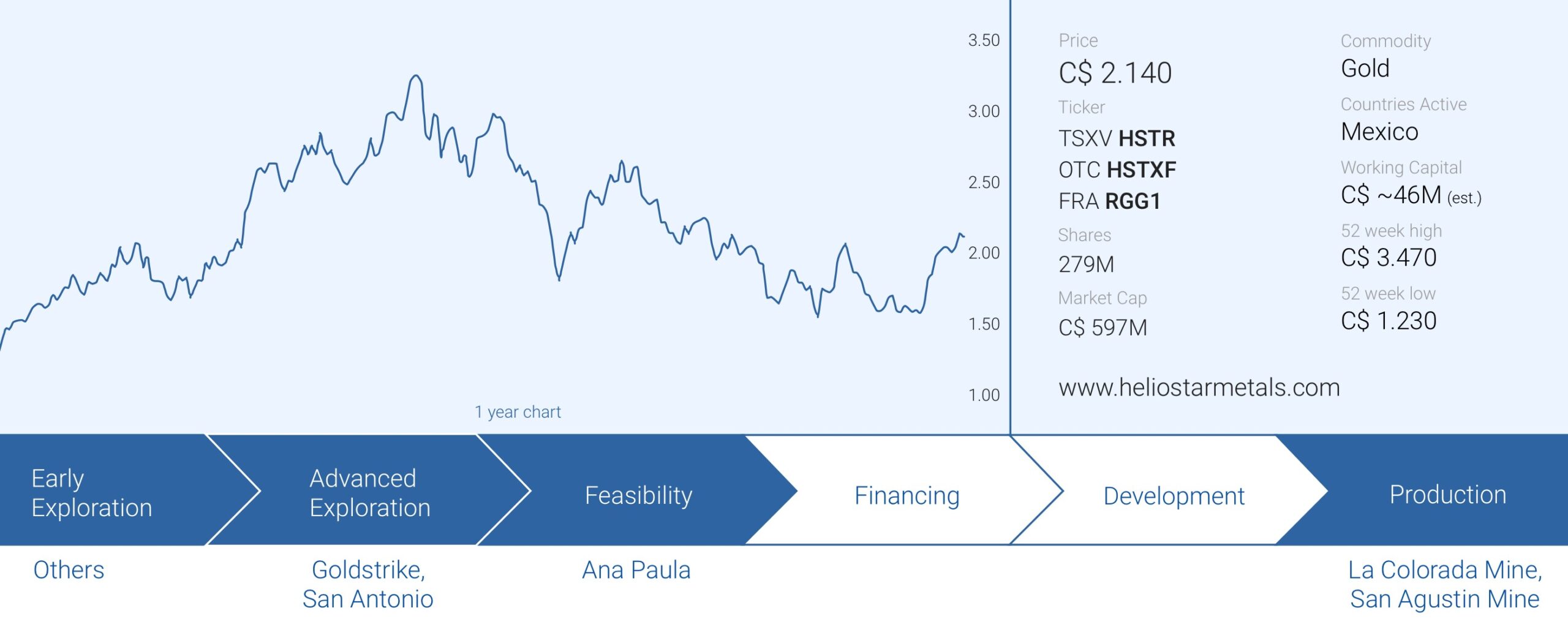
Heliostar Metals (HSTR.V) is taking advantage of the strong gold price to beef up its balance sheet. While the cash flow result in Q2 was a bit lower than anticipated due to the actual timing of the gold sales (the gold has been produced, but not all ounces were sold before the end of the quarter), we anticipate a strong working capital release in Q3 to allow the company to further build its cash position.
The strong financial results will also allow Heliostar to put down deposits for the long-lead items for Ana Paula. While the feasibility study (and formal investment decision) is only expected towards the summer of next year, the company wants to nip any delays in the bud and will already order the key pieces of infrastructure to avoid any supply chain risks.
The full-year guidance for 2026 was reconfirmed, and this implies a H2 production of approximately 25,000 ounces of gold at an AISC of around $2100/oz (and perhaps slightly lower than that if the silver price remains strong). This further implies a healthy margin of in excess of US$2,000/oz and US$50M in H2 pre-tax cash flow on the mine sites level (before taxes, corporate overhead and expensed exploration).
Heliostar’s 2024 bet/strategy to buy older almost-depleted mines for a song is paying off handsomely. And in hindsight, it absolutely was the right decision to pursue fast and immediate cash flow generation to support its ambition to become a 500,000 ounce gold producer by 2030.
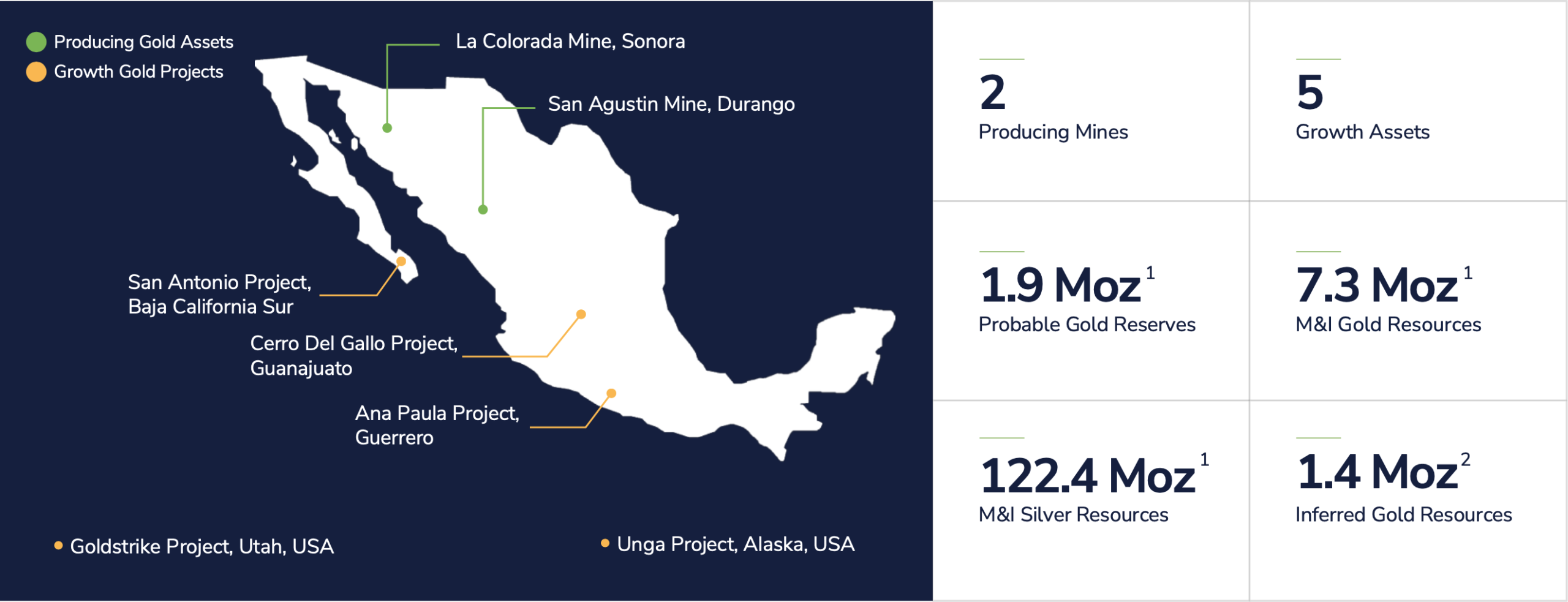
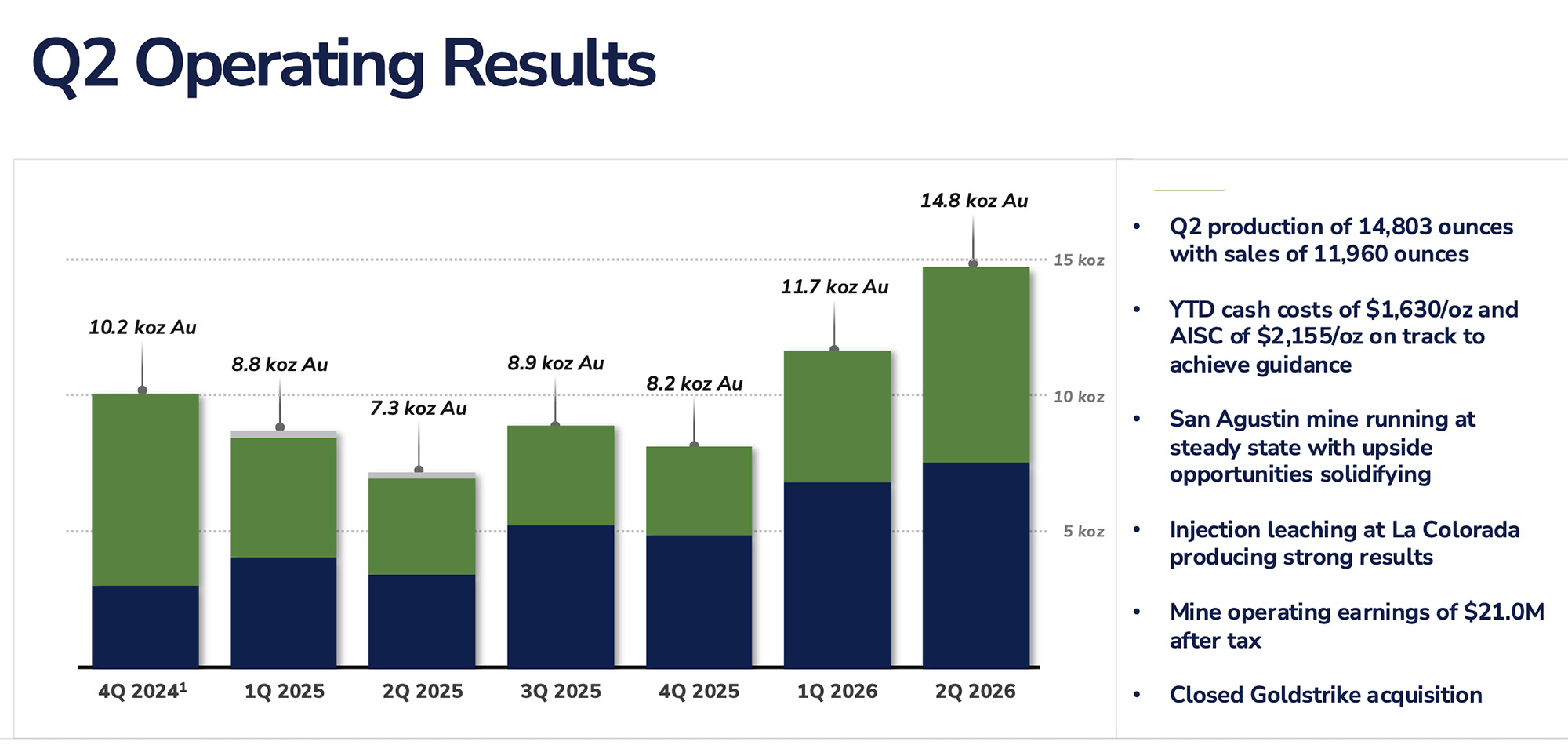
A solid production performance in Q2
Heliostar Metals produced just over 14,800 ounces of gold and just under 80,000 ounces of silver during the June quarter. There was a delay in actually selling the ounces and only 11,960 ounces gold and 52,997 ounces of silver were actually sold. That’s not an issue as it merely delays the revenue and cash flow. And as gold and silver prices remained quite steady in July (still exceeding $4000/oz and $55/oz respectively), we don’t expect the company to have incurred any negative pricing risk.
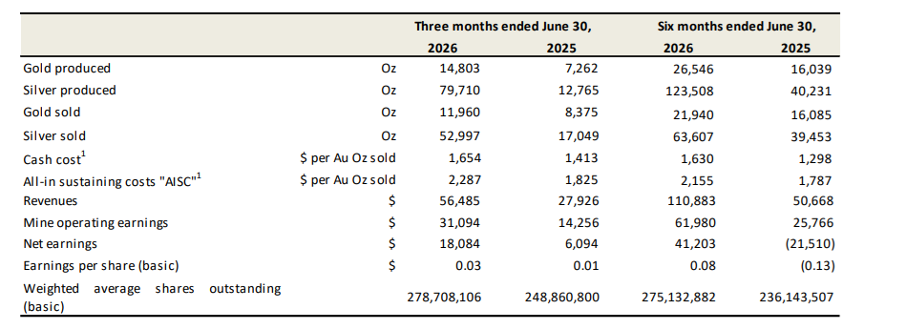
The table above also highlights a direct impact on the AISC per ounce of gold that was effectively sold, but we anticipate the US$2287/oz AISC to just be a temporary road bump due to the timing of the sales. As we’ll explain later in this update, the full-year guidance remains unchanged.
As Heliostar was able to sell its gold at an average price of just over US$4,400 per ounce, the combination of a 40% higher amount of gold sold and a 35% higher realized gold price compared to the same quarter a year before helped to boost the reported revenue to US$56.5M, resulting in mine operating earnings exceeding US$31M.
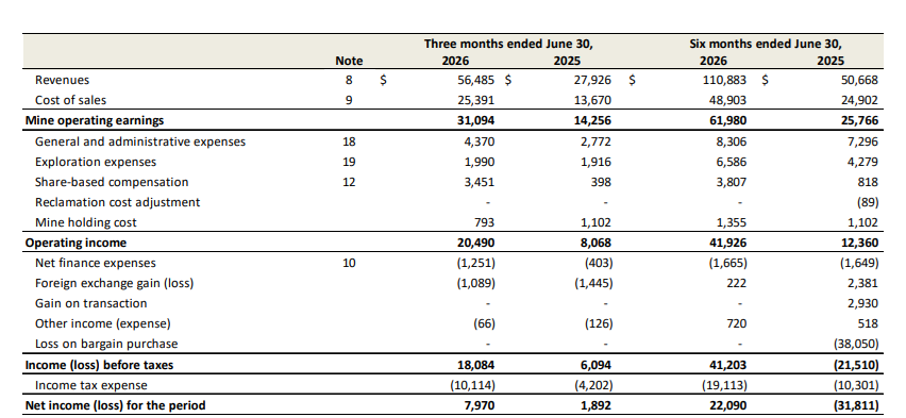
As the income statement above shows, the operating income came in at US$20.5M, and this already includes US$2M in expensed exploration efforts (including $0.7M at Cerro del Gallo and $0.5M at San Agustin). While the bottom line result was a slightly disappointing US$8M (for an EPS of US$0.03), there are three important factors at play here. First of all, about 3,000 gold-equivalent ounces were produced but not yet sold. This means that the fixed overhead expenses required a higher proportion of the mine operating earnings.
Secondly, one of the operating expenses was the US$3.45M share-based compensation. Not only is this not a recurring item (this expense was predominantly related to a 7.55M option grant with a C$2.26 exercise price), it also is a non-cash item. It has no impact on the cash flows generated by Heliostar and is merely an ‘accounting item’ on paper and it’s not expected to be a factor through H2. The only impact further down the road would be a dilution by 7.55M shares (and a C$17M cash inflow) if those options are exercised.
A third element that’s worth highlighting is the relatively high tax pressure, which came in at approximately 55% of the pre-tax income. This appears to be mainly related to the higher ‘underlying’ mine operating earnings (as for instance share-based compensation on the Canadian level doesn’t create a tax deductible item in Mexico). The average tax rate should also come down in the next few quarters.
So the bottom line is that the income statement was a bit skewed due to non-recurring and non-cash items.
The company also provided its cash flow statement, and in the first half of the year (21,940 ounces of gold sold at an average realized price of $4609/oz) the reported operating cash flow was US$24.4M. This includes a US$16.1M investment in working capital items, predominantly related to changes in the inventory levels (directly related to gold that was produced but not yet sold. The gold is ‘there’, but has to be booked as an inventory until it actually gets sold).
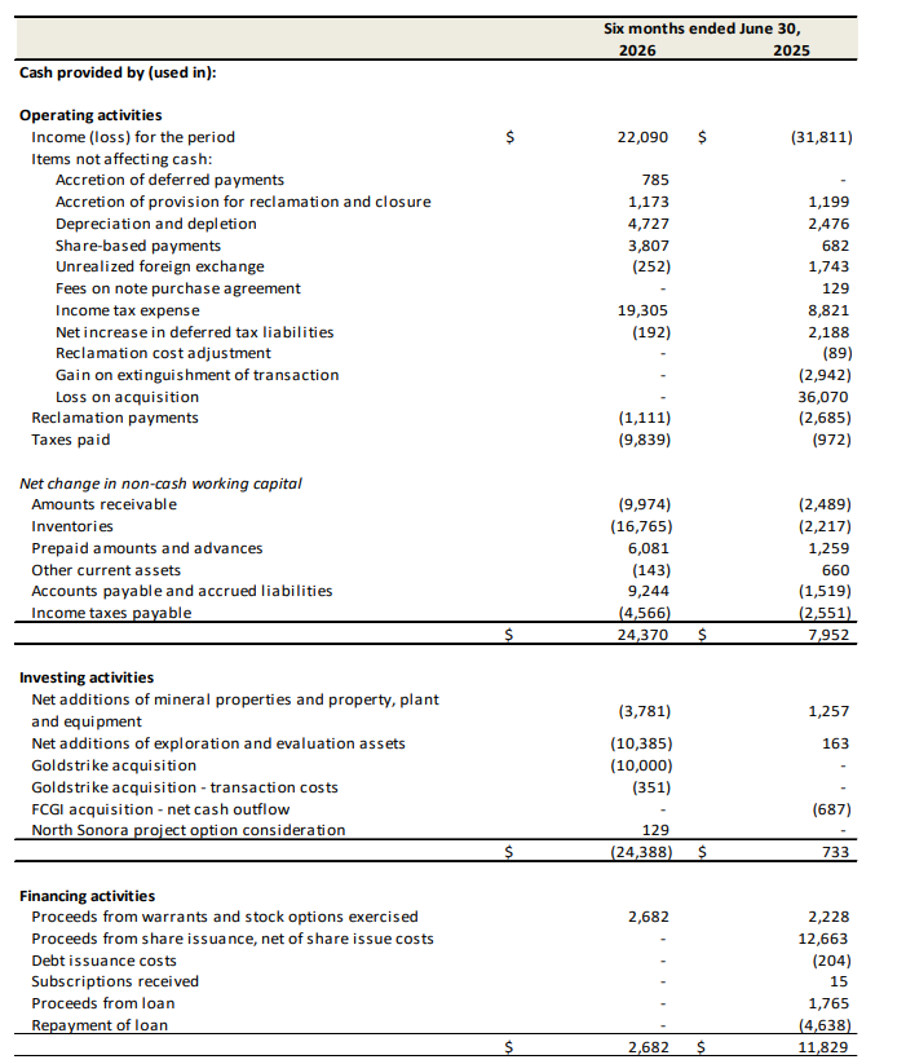
This means that based on the aforementioned elements, the underlying operating cash flow was approximately US$40.5M, and after deducting the US$14.2M in capital expenditures, the underlying free cash flow exceeded US$26M in H1 2026. Based on the current share count of 279.3M shares outstanding, this represents US$0.093 per share, and close to C$0.13 per share using the current exchange rate.
This also means Heliostar generated plenty of cash to fund the US$10M cash payment in Q2 for its Goldstrike acquisition as well as the $0.35M in transaction costs related to this deal.
And it goes without saying the balance sheet remains very strong as well. At the end of June, Heliostar had approximately US$46M in working capital, including US$43M in cash. We expect the cash balance to increase in the current quarter and semester on the back of additional free cash flow hitting the accounts while a portion of the inventory levels will be converted into cash as well.
The full-year guidance remains valid
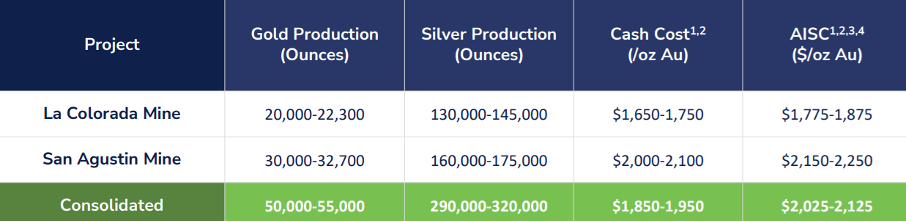
As indicated below, the company plans to produce 50-55,000 ounces of gold and 290-320,000 ounces of silver at an anticipated AISC of $2025-2125 per ounce of gold (keep in mind a higher silver price compared to the company’s budget price of $47.50 will have a positive impact on the all-in sustaining cost per ounce of gold as the by-product revenue will come in higher). Heliostar will still be hoarding cash thanks to its operational assets, and that cash will provide the required equity component (or at least a substantial part of the equity component) of its future growth projects.
The anticipated capex to lay back the La Colorado open pit can easily be covered by the current cash position, and future cash flows will only add to that cash pile. The Ana Paula initial capex is estimated at US$300M as per the November 2025 PEA, so assuming a 40/60 equity/debt financing structure would require Heliostar to put up US$120M in equity (read: retained earnings and available cash).
Recent developments at the key projects
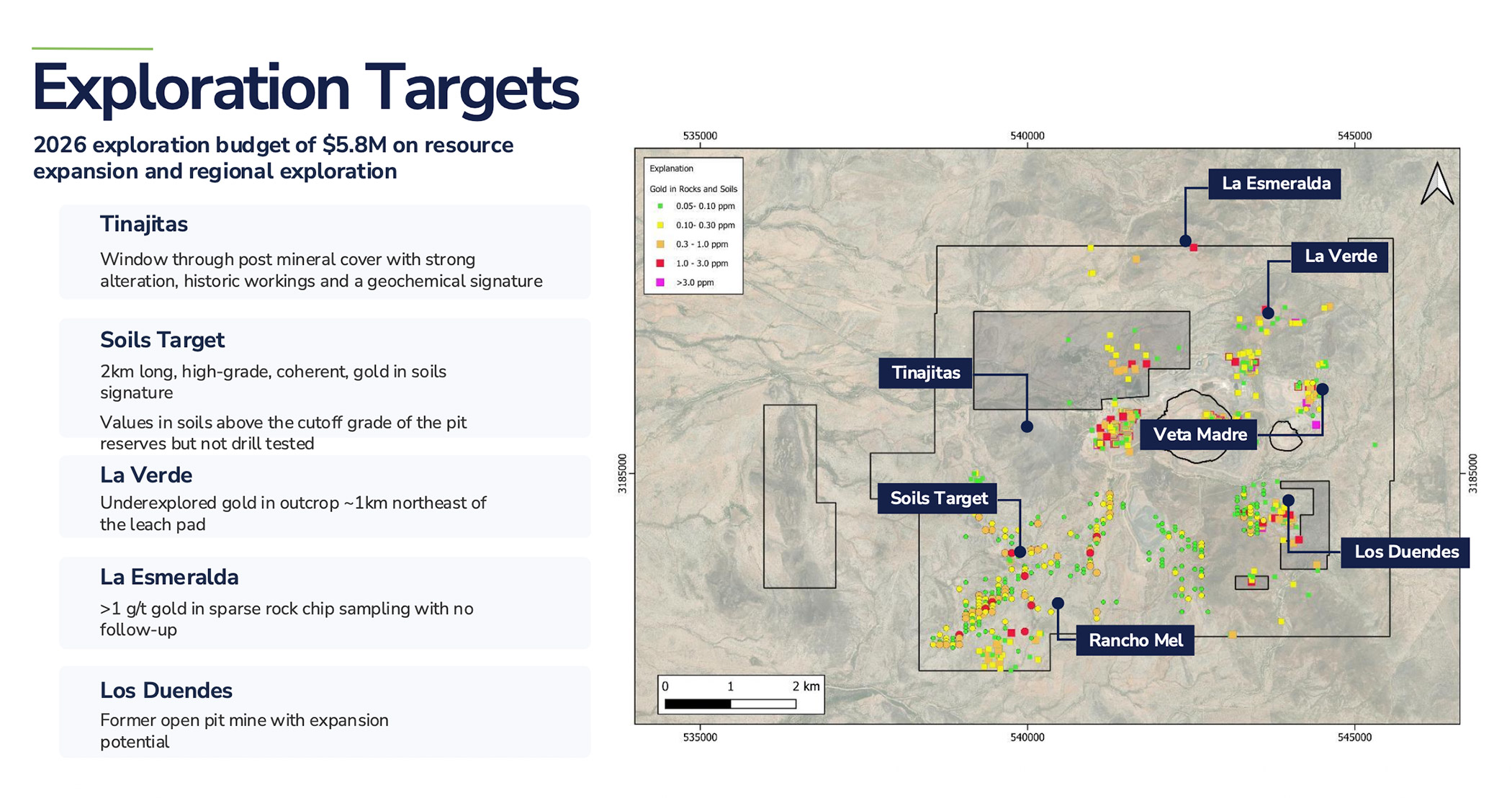
As disclosed before, Heliostar received the final approval for the change of use of soils permit at the La Colorada mine, which will allow for the planned pit expansion at Veta Madre to access additional reserves. Waste stripping will start this quarter, confirming the original plan to start producing from this zone from the second quarter of 2027 on. Heliostar will not publish a technical report on the further expansion to the Veta Madre Plus pit targeting an additional 10,000-15,000 ounces into the mine plan, but we expect to see more practical details when it announces its 2027 guidance.
Also keep in mind Heliostar has earmarked US$5.8M for exploration activities in the greater La Colorada district, as there are plenty of exploration targets that are worth following up on. All these exploration targets are located within trucking distance from the production facilities, reducing the hurdle to determine ‘critical mass’.
At San Agustin, mining activities at the Corner Area are ongoing, and initial drill results in that area of the project has confirmed the presence of oxide-hosted gold mineralization more than 200 meters beyond the current reserve boundary, and more gold mineralization was encountered elsewhere on the property. This should extend production at the mine through to at least the end of next year.
This resulted in Heliostar to increase its drill program from 10,000-15,000 meters to 15,000-18,000 meters while adding a second drill rig to speed things up. We obviously cannot object to more drilling, especially as the $4000+ gold price enables Heliostar to generate plenty of cash flow to complete the additional drilling. The sulphide mineralization located below the current San Agustin pit will also be drilled, but the focus will initially remain on oxide-hosted mineralization.
The Ana Paula project in Mexico’s Guerrero state is the next stepping stone in the company’s growth strategy. The company is wrapping up its exploration drilling as we speak, and will now move onto ‘engineering’ drilling. The drill program was pretty substantial with in excess of 30,000 meters drilled, which is about 15% more meterage than initially planned as the initial drill results exceeded expectations. The assay results confirmed the continuity of high-grade mineralization within the high-grade panel, and the exploration drilling confirmed the mineralization may extend beyond what’s currently in the PEA mine plan. Assay results for the last batch of infill and step down holes are still pending, and the infill data will be incorporated in an updated resource (and reserve) calculation that will be used for the Definitive Feasibility Study at Ana Paula (which should be completed in Q2 2027).
Heliostar is quite confident in the outcome of that study (hardly a surprise, given the very robust PEA results and the current higher gold price could reasonably be expected to compensate for any capex and opex increases) and plans to already order long-lead equipment later this year, before it even makes an official construction decision at Ana Paula. Assuming the feasibility will be published on time and assuming it confirms the economics of the high-grade Ana Paula project, a formal construction decision can be expected in the summer of 2027 with first gold in Q4 2028.


Conclusion
Heliostar’s balance sheet has never been this strong and as the gold price appears to remain comfortably above $4000/oz, it’s safe to assume the net working capital position (and hopefully the cash balance too) will increase again this quarter. While there may be fluctuations based on working capital changes as well as the timing of making deposits for long-lead items at Ana Paula, the underlying operational and financial momentum is strong.
Heliostar has always maintained its ambition is to produce 500,000 ounces of gold per year by 2030. And although this year’s production is expected to be ‘just’ 50,000 ounces, the Ana Paula project and Goldstrike project could drastically change the production profile in the second half of this decade – assuming positive final investment decisions.
The strong gold price provides a nice tailwind, and every day Heliostar can sell the yellow metal it produces at in excess of $4,000 per ounce further derisks the story. Not only because it allows to add more cash to the balance sheet, but also because discussions/negotiations with financiers for Ana Paula will undoubtedly be much easier at $4250 gold than at $3000 gold.
Disclosure: The author has a small long position in Heliostar Metals. Heliostar Metals is a sponsor of the website. This post is for educational purposes only; be mindful investing in junior mining stocks is risky and you may lose your entire investment if things go wrong. Please read our full disclosure.