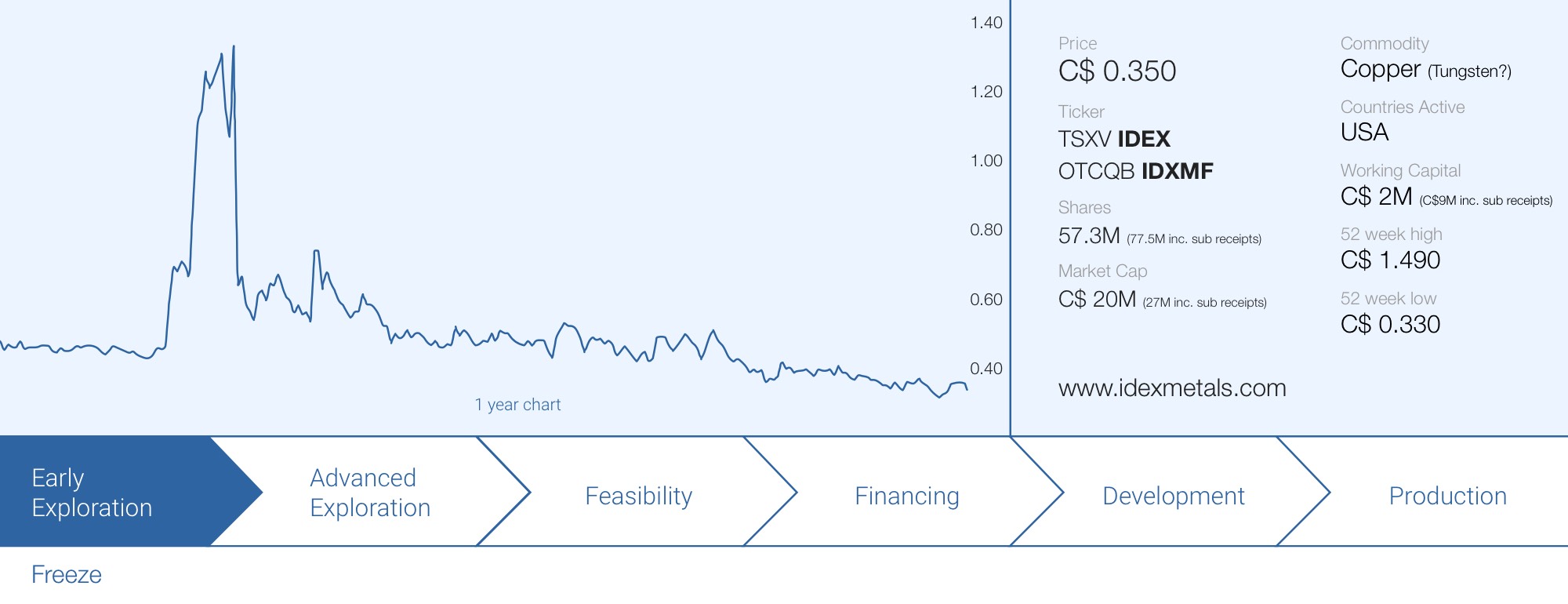
After interpreting all the data that was gathered from the 2025 exploration program, IDEX Metals (IDEX.V) is now gearing up for what will be a very busy summer program at its flagship Freeze copper project in Idaho.
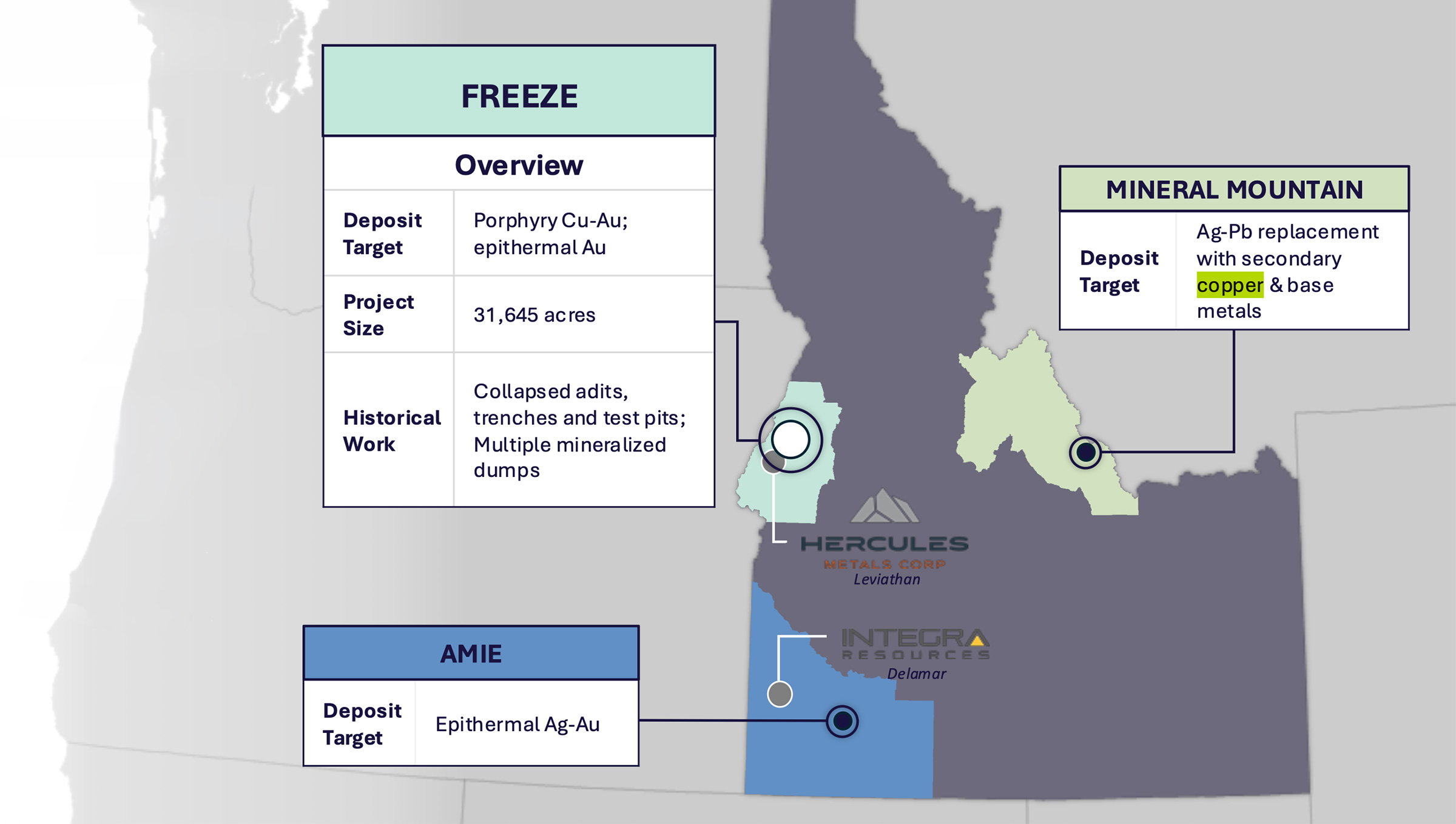
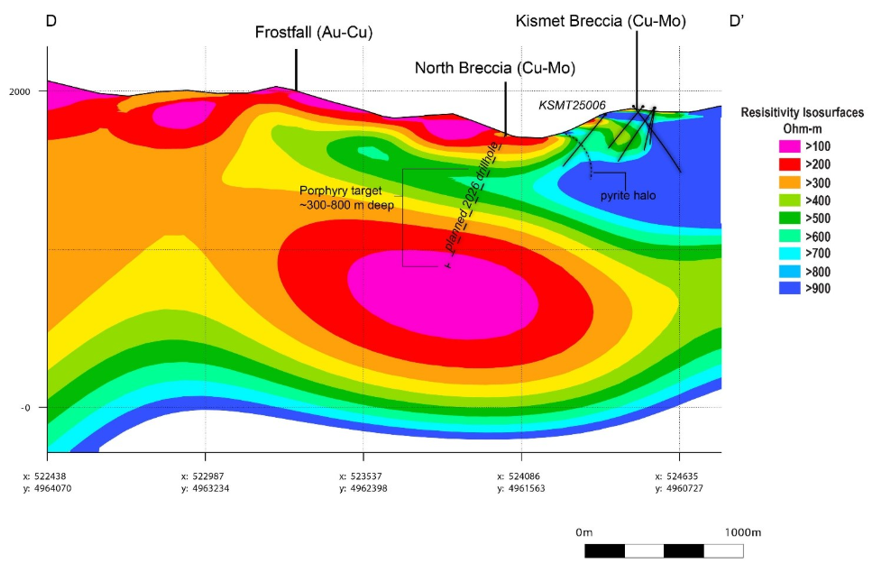
The past few weeks were quite busy for the company. It completed an C$8.05M capital raise (which means it is now fully funded for its 2026 exploration plans) and it signed an agreement with WestGold Metals (WGM.C) whereby the latter can earn up to 90% in IDEX’s non-core assets in Idaho. This means the company has now streamlined its operations with a sole focus on working towards the discovery of a copper porphyry system. As explained in a previous report, the final hole of the 2025 drill program intersected intrusive-hosted copper-molybdenum mineralization, with increasing molybdenum grades towards the bottom of the hole. This indicates there’s a high-priority porphyry target right underneath the North Breccia zone.
And with in excess of C$8M in cash on the bank (including the cash from the recently issued subscription receipts), IDEX Metals now has enough firepower to go chase this target and hopefully convert it into a bona fide discovery in Idaho’s Copper Belt.
In this publication we will review the recent updates provided by IDEX, and we also sat down with CEO Clayton Fisher to discuss the plans for 2026.
Kicking off what will be the busiest exploration season yet
IDEX Metals recently announced it has signed an agreement with Geotech Drilling Services to complete approximately 10,000 meters of drilling in 20 drill holes using two drill rigs. Most of the holes have a planned depth of 300 meters to 800 meters but in order to thoroughly drill-test the porphyry targets, some deeper holes will be required and the contracted rig is capable to drill up to 1,200 meters.
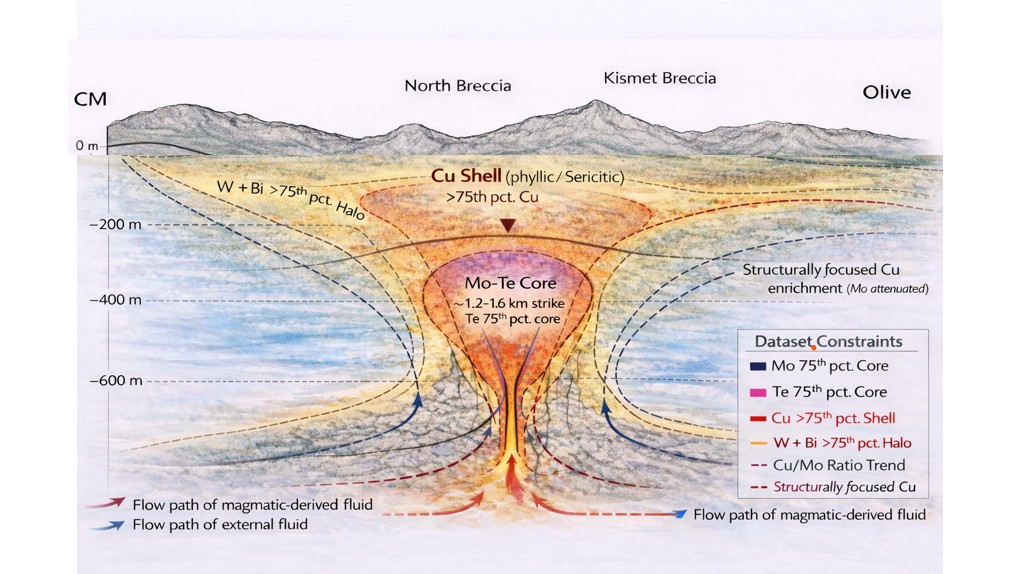
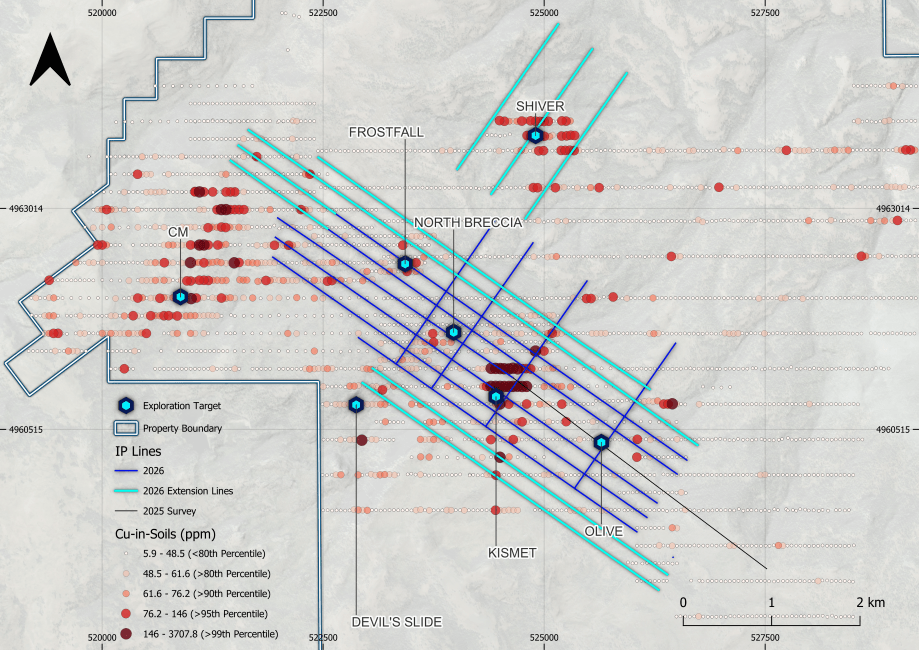
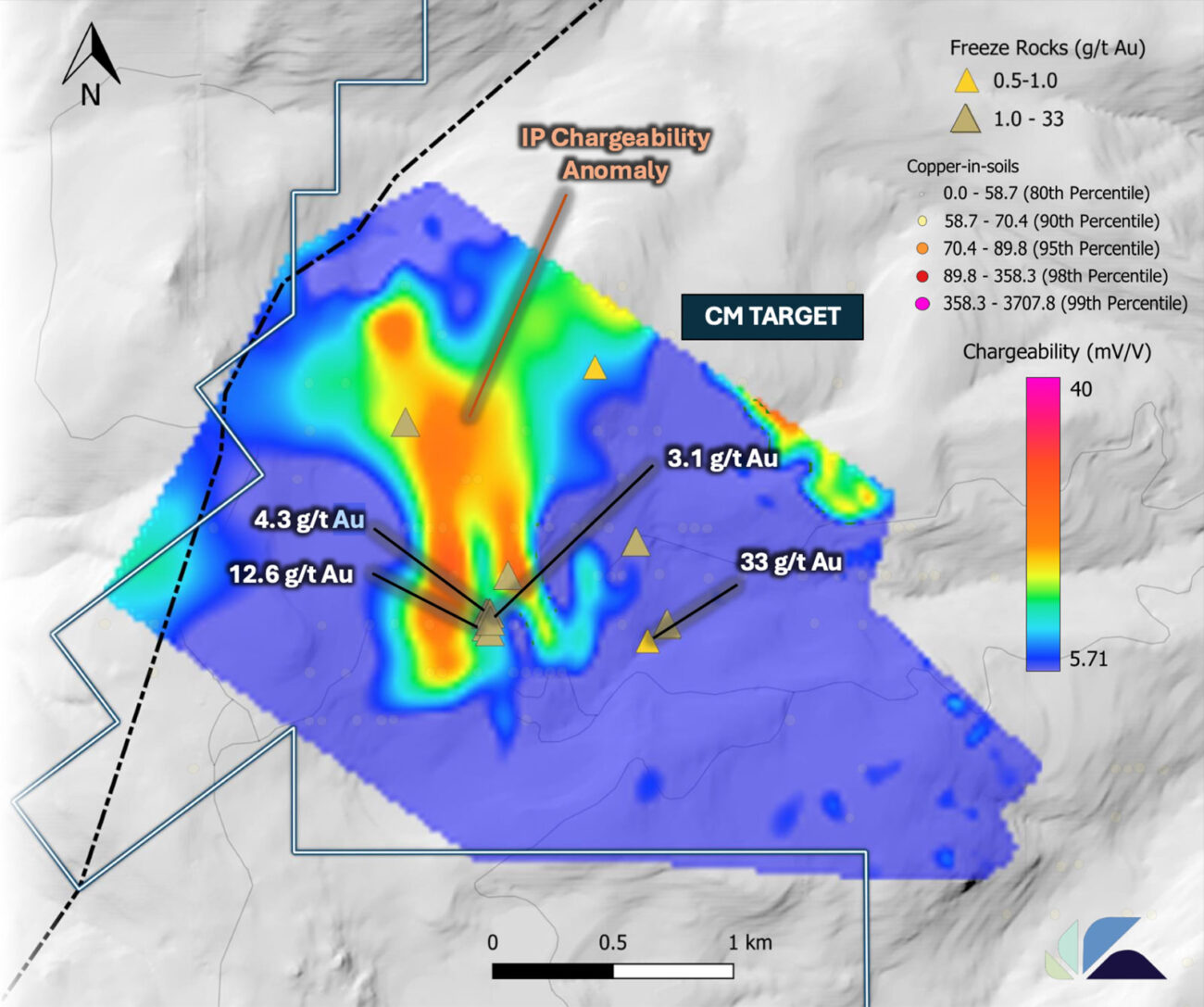
The company also completed the interpretation of an ongoing induced polarization survey. The size of this survey has almost doubled in size (according to the company, preliminary results were sufficiently encouraging to immediately upgrade the survey in real time) and will now include 64 line kilometers upon adding additional coverage to the north. This will help the company to get a better idea of what the CM Target looks like. As a reminder, this target is located on ground that is controlled by the US Forest Service (‘USFS’) and it took a while to gather all required permits to conduct exploration on this part of the Freeze project.
We are looking forward to seeing progress on three important elements at Freeze this year.
First of all, it goes without saying that drill testing the large porphyry target could be a major catalyst this year. While exploration is never easy and you only know what Mother Nature has in mind once you drill a target, IDEX’s target appears to be quite appealing. The 2025-2026 evaluation of the lithology, alteration and geochemistry at the bottom of hole 6 (the final hole of the 2025 drill program) indicates a vector towards a potential heat source. This interpretation is further validated by seeing increasing molybdenum values and the development of localized potassic alteration overprinted by phyllic alteration. That’s all quite technical, but the main takeaway is that the interpretation of the data supports the exploration theory that a deeper, mineralized magmatic-hydrothermal system may be present in the greater Kismet corridor.
Secondly, We would like to see the company gather more information about the tungsten mineralization. As we explained in the previous report, while the tungsten grades that have been encountered in the first few holes are relatively low, it would definitely still be a value-add. And although the spot price for tungsten may be overheated right now and we have recently seen increased volatility (the supply chain risk is real though, so perhaps we are entering into a ‘new normal’ when it comes to pricing) but if we would use a long-term price of US$1000/mtu (about 40% of the current Western world spot price) and apply an 80% recovery rate and a 75% payability percentage, 805 ppm Tungsten still represents a rock value of US$48 per tonne of rock. And in this scenario, it would add about 0.4% to the copper-equivalent grade.
And finally, it will be interesting to see preliminary exploration results from for instance the CM target and other exploration targets on the project. Additionally, we hope to see WestGold hit the ground running on the three projects it is acquiring from IDEX (see below).
Dissecting the agreement on the ‘secondary’ properties in Idaho
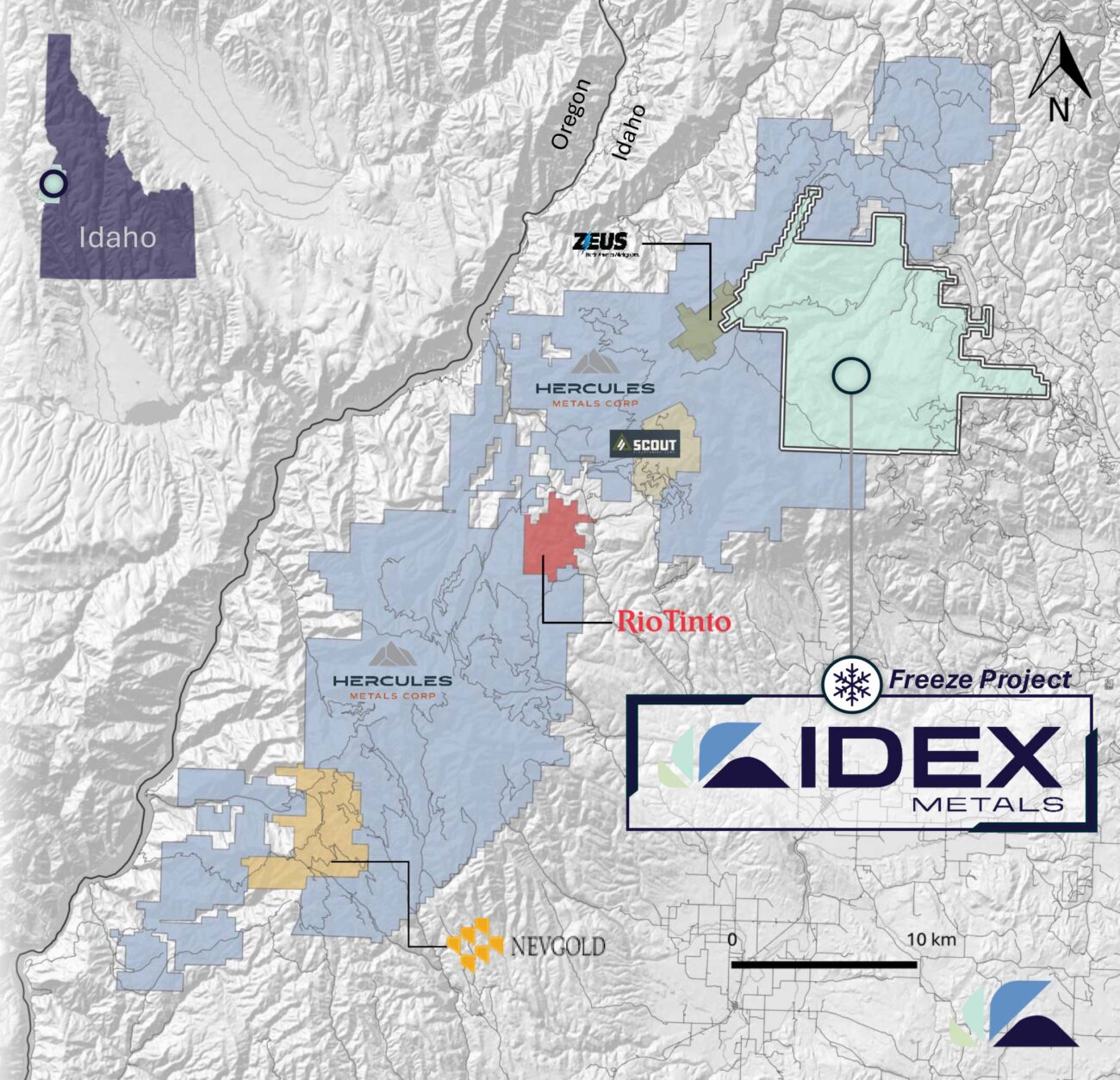
The company recently also announced it has entered into an option agreement with WestGold Metals (WGM.C) whereby the ladders can earn up to a 90% interest in three exploration properties that are located in Idaho. The Amie project, Silver Rock project and Demming Project are all part of this agreement which will allow IDEX to retain exposure while another company does the heavy lifting.
The optionee will have to issue 5.74M shares to IDEX And complete a C$100,000 cash payment. On top of that there is a minimum exploration commitment as WestGold is required to spend at least C$5M in exploration expenditures on the three properties over a three year period. This includes a minimum spend of C$1M in Y1 and to complete at least C$3M in exploration expenditures by the 2nd anniversary of the agreement.
Upon the completion of these required steps, IDEX will retain a 10% stake in all three projects, while it would also receive a 1.5% net smelter royalty on the assets. Westgold will be allowed to repurchase 2/3rd of the 1.5% NSR for a C$2M cash payment.
As it was unlikely IDEX would have had the time and/or manpower to put together comprehensive exploration programs on these three assets, this joint venture agreement appears to be a good move. The optionee recently completed a C$2M financing priced at C$0.08 but its share price on the open market is currently slightly higher than that resulting in a pro forma value of approximately C$500,000 for the 5.74M shares. Together with the cash payment IDEX is receiving approximately C$750,000 upfront. And upon completion of the Westgold financing, IDEX will own in excess of 7% of the company which of course provides healthy exposure to any discovery Westgold may make.
This now frees up the management time and clearly indicates the company is fully committed to the Freeze project.
The company is cashed up after its C$8M raise
A company obviously needs to have access to cash in order to complete a meaningful exploration programme, and that was an issue IDEX Metals also had to deal with ahead of this year’s exploration season. The company initially announced a brokered private placement in an attempt to raise up to C$7M in a special warrant financing. These special warrants will be converted into free trading stock when IDEX files a prospectus within the next few weeks. Should this process take longer than nine weeks following the closing date, participants in the special warrant financing will receive a 5% bonus (with 1.05 units being issued). But as the preliminary shelf prospectus has now been filed, and we expect the special warrants to be converted into units soon.
As the demand for the financing was pretty strong, it was upsized to C$8.05M and the special warrants financing was closed in early May. Each unit is priced at C$0.40 and contains a common share and half a warrant. Each full warrant will allow the warrant holder to acquire an additional share of IDEX Metals for C$0.60 during a 24 month period. The latter of course means that any additional exploration success (and market recognition of said success) would bring those warrants ‘into play’. The 10M warrants could bring in an additional C$6M in proceeds and that would allow IDEX to continue to thoroughly explore its flagship project.
Sitting down with Clayton Fisher, CEO
The Freeze Project
After a successful exploration program at Freeze last year, with mineralization encountered in all holes drilled, we are of course looking forward to seeing IDEX capitalize on this momentum and further define the mineralized areas at Freeze. Could you elaborate on the plans for this year?
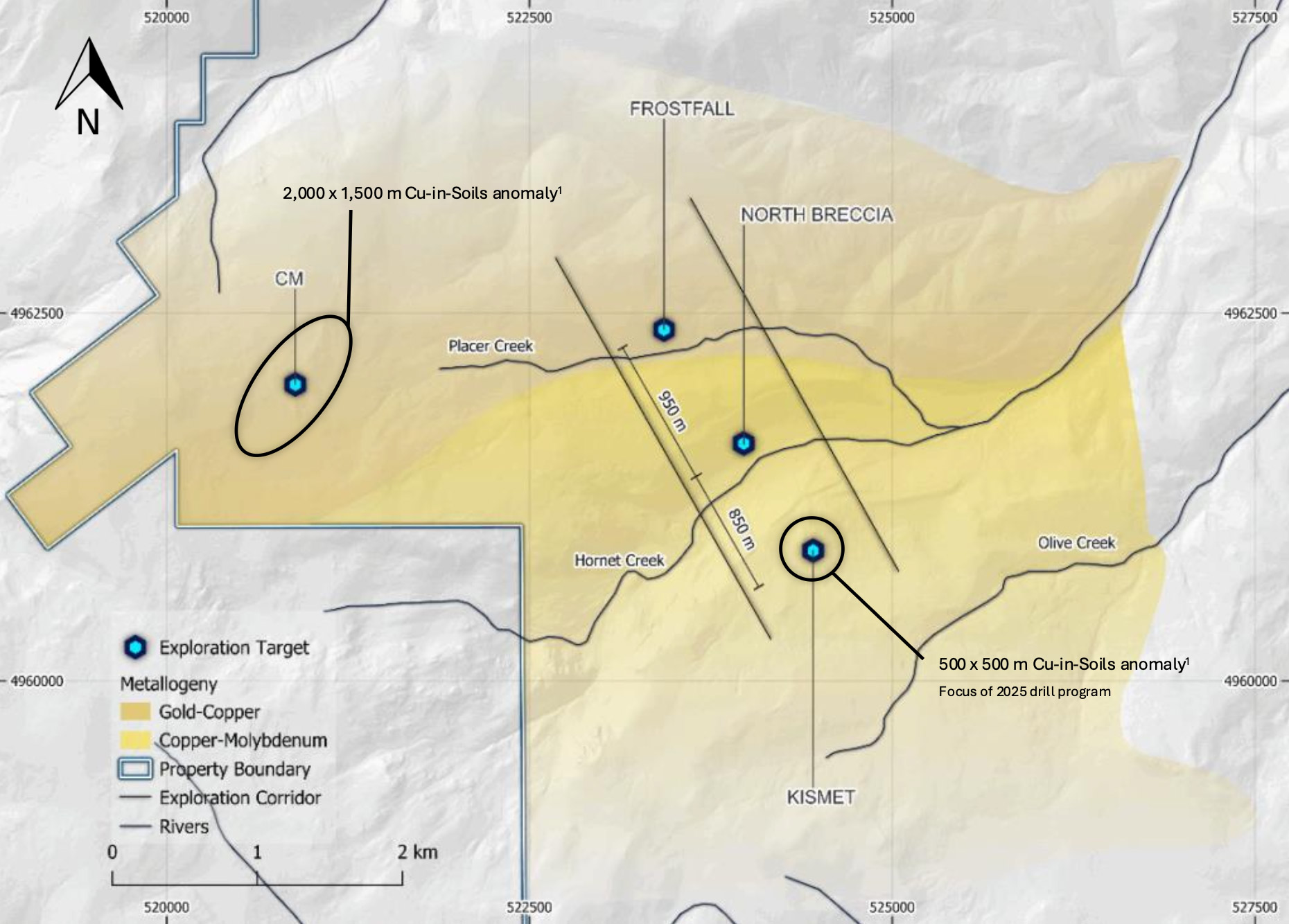
The 2025 program was important because it confirmed that Freeze is not just a single showing or isolated breccia body — it is an emerging district-scale copper-gold-molybdenum porphyry system with multiple targets and clear vectors for follow-up. Every hole drilled in 2025 intersected significant copper mineralization, and by the end of the season we had identified several priority areas for 2026, including Kismet, North Breccia, CM, Shiver and other targets along the broader Freeze project.
For 2026, the plan is to significantly scale up. We have engaged Geotech Drilling for what is expected to be approximately 10,000 metres of diamond drilling across about 20 holes, with most holes planned in the 300–800 metre range and select holes designed to test as deep as 1,200 metres. The first rig is expected to mobilize in early June, with a second rig to follow shortly thereafter.
The program will be guided by the expanded IP survey, 2025 drilling, MT/ELF geophysics, soil geochemistry, mapping and surface sampling. The main objective is to move from proof-of-concept drilling into systematic target testing: expanding the known mineralized footprint at Kismet, testing the North Breccia porphyry target, advancing CM and Shiver, and continuing surface work across the broader property.
We notice you will drill a few deep holes, up to 1,200 meters. Could you elaborate on the game plan and theory behind those very deep holes? We assume they will be designed to drill-test the entire porphyry target from top to bottom?
That is broadly the idea, but with an important nuance: we are not drilling deep holes simply for the sake of depth. The deeper holes are designed to test the vertical architecture of the system where multiple datasets point toward a deeper porphyry source.
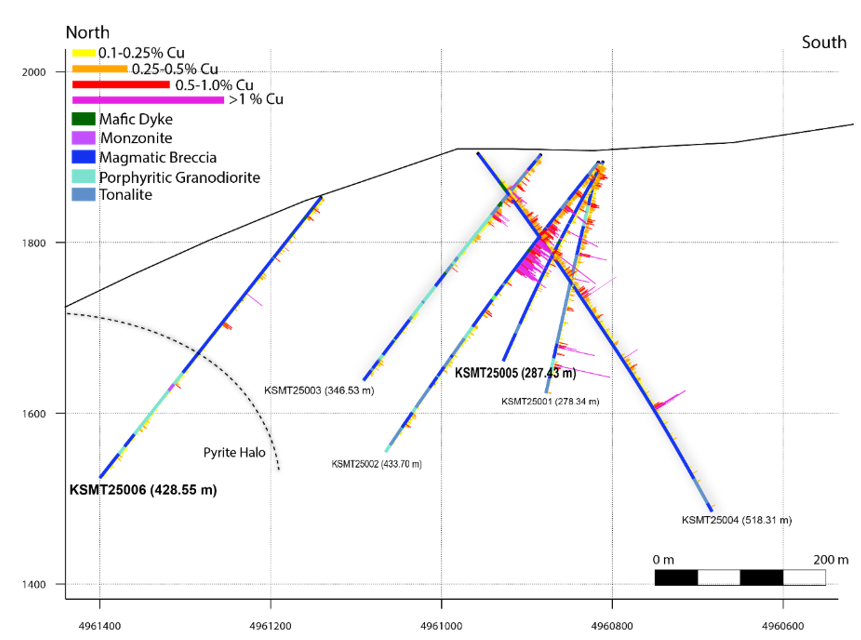
In 2025, we saw the system evolve from a surface copper-bearing tourmaline breccia complex at Kismet into intrusive-hosted copper-molybdenum mineralization at depth. Hole KSMT25006 was especially important because it intersected a pyrite-rich shell and then transitioned into molybdenite-chalcopyrite-bearing veining at depth — exactly the type of vector we look for when trying to move toward the hotter, deeper parts of a porphyry system.
So the deeper holes are intended to test the full porphyry architecture: the near-surface breccia and oxide/sulphide copper zones, the pyrite-rich shell, and the interpreted deeper intrusive centre. Most holes will still be moderate-depth, but a few deeper holes give us the ability to understand scale, zonation and whether the system strengthens at depth.
One of the gamechangers in the assay results from last year’s drill program was the presence of tungsten. Do you expect the tungsten mineralization to be spread out as well? Although the grades are low, they could provide a nice additional kicker to the metals and revenue mix at Freeze. When do you anticipate to complete a round of metallurgical test work to validate the initial findings?
The tungsten results were definitely an important surprise and something we are taking seriously. In hole KSMT25002, IDEX reported 420.81 metres grading 0.37% copper, 1.96 g/t silver, 192 ppm molybdenum and 419 ppm tungsten from 1.89 metres, including stronger sub-intervals such as 101 metres grading 1.02% copper and 805 ppm tungsten.
That said, we are still early in understanding the distribution and controls on tungsten. At this stage we would not want to assume it is uniformly distributed across the system. It may be related to certain intrusive phases, breccia phases, alteration zones or structures. The 2026 program should help answer that by testing multiple parts of the system and allowing us to compare tungsten values against lithology, alteration, copper, molybdenum and geophysics.
From a value perspective, we view tungsten as potential upside rather than the core driver of the story today. Copper remains the primary focus, with molybdenum, gold, silver and tungsten all having the potential to enhance the overall metal mix if continuity and recoverability are demonstrated.
On metallurgy, the right approach is to wait until we have enough representative material from the key mineralized domains — oxide, transition, sulphide, intrusive-hosted mineralization and tungsten-bearing intervals. I would expect initial metallurgical or mineralogical characterization to follow the 2026 drill program once we have the right sample material and a better understanding of geological domains. We want the first round of test work to be meaningful, not premature.
What is the drill budget at Freeze for this year?
We have not publicly broken out a separate drill budget, but the important point is that the 2026 exploration program is fully funded. IDEX closed gross proceeds of approximately $8.05 million in May, and the stated use of proceeds includes exploration and development at Freeze, including drilling, geophysics and working capital.
That financing allows us to execute the planned 10,000-metre drill program, complete the expanded IP survey, and continue the supporting geological work required to refine targets as the season progresses.
How is the availability of drill rigs these days? And the lab turnaround times?
Rig availability is always something we monitor closely, particularly for a program of this scale. We are in a good position because we secured Geotech Drilling early for the 2026 program. Geotech is a large and experienced contractor with modern equipment and broad operating experience, which gives us confidence in our ability to execute the program efficiently.
On assay turnaround times, we are planning around the reality that labs can become busy during the field season. From our experience turnaround times can vary from 1-3 months.
While most of the attention will go towards the drill program, let’s not forget about the IP Survey. You recently announced the size of the survey has almost doubled to 64 line kilometers, and will now include lines over the USFS ground. What are you hoping to learn from this survey?
The IP survey is a very important part of the 2026 program because it helps us refine drill targeting before we commit metres. The original 37 line-kilometre survey was designed to cover the Kismet-North Breccia-Frostfall corridor and define near-surface structures, alteration zones and sulphide-related chargeability features ahead of drilling.
Based on encouraging preliminary results, we expanded the survey to approximately 64 line-kilometres. The expansion adds coverage north and south, including lines over USFS ground, to better evaluate the area between emerging anomalies associated with the CM target. We also added coverage over Shiver to help advance that target toward drill-ready status.
What we are hoping to learn is the geometry and continuity of the sulphide system: where chargeability highs may represent pyrite-rich shells, where resistivity features may correspond to alteration or intrusive phases, and how the Kismet Corridor connects with CM, Shiver and other targets. In simple terms, the IP survey should help us prioritize which anomalies deserve drill holes first and how to orient those holes.
The WestGold Metals agreement
The option agreement with WestGold is interesting. It allows you to keep the management time and treasury focused on Freeze, while you retain exposure to the three properties that are subject to the agreement. Can you elaborate on how this transaction came to be? Were there multiple interested parties?
The WestGold transaction is a good example of how we want to build IDEX: stay focused on our flagship asset while still creating value from the broader portfolio.
Freeze is clearly our primary focus and the asset where we believe we can create the most value for shareholders. At the same time, Amie, Silver Rock and Demming are real exploration assets that deserve capital and attention. The WestGold agreement allows those projects to move forward under a dedicated operator while IDEX retains meaningful upside.
The structure is attractive because it gives IDEX non-dilutive exposure through a combination of WestGold shares, a cash payment, committed exploration expenditures, a retained 10% carried interest and a retained NSR royalty. WestGold has the option to acquire a 90% interest in the three projects and is required to spend at least $5 million over three years to exercise the option.
On the level of interest, I would frame it this way: we had discussions around the best path to advance the non-core Idaho portfolio, and WestGold emerged as the right partner because the structure aligned with our priorities — committed work on the ground, shareholder exposure to upside, and a clear path for IDEX to remain focused on Freeze.
We like the C$5M minimum spending commitment within the first three years, as that really ensures actual work will get done. When do you expect the option agreement to close?
The agreement is subject to customary closing conditions, including applicable regulatory and stock exchange approvals. So we cannot give a definitive closing date until those conditions are satisfied.
Our expectation is to move through that process as efficiently as possible. The key point for shareholders is that the agreement is structured to ensure real exploration dollars are spent on the projects, while IDEX retains exposure and keeps its capital and technical team focused on Freeze.
The Financing & Corporate
Congratulations on closing the C$8M financing, which of course puts you in an excellent position to kick off this year’s exploration season. It was also nice to see an upsize to C$8M. Can you elaborate on the mix of participants? Was this mainly a retail-driven financing or did you see some institutionals come into the capital as well?
Thank you! It was fully allocated with the overallotment exercised, which closed for gross proceeds of approximately $8.05 million, with Clarus Securities acting as lead.
The book included strong support from existing shareholders, but importantly it also helped broaden and strengthen our shareholder base. We saw participation from eight institutions, including four new institutional investors, which is encouraging because it reflects growing recognition of Freeze as a serious copper-gold-moly porphyry exploration opportunity in a top-tier jurisdiction.
From our perspective, the financing was not just about raising capital. It was about putting the company in a position to execute. With the financing complete, IDEX is fully funded for the 10,000-metre drill program, the expanded IP survey and the supporting field work required to advance multiple targets across Freeze. That gives us a strong platform heading into what should be the most active exploration season in the company’s history.
Conclusion
After raising in excess of C$8M at C$0.40, IDEX Metals is now fully cashed up to complete its 2026 exploration efforts. While additional geophysical programs and the IP Survey will deliver useful data, we are mainly interested in the assay results from the drill program.
It was exceptionally encouraging to see all holes of the 2025 drill program encountered copper, and we hope and expect IDEX Metals to continue to build onto this momentum. This year’s drill program will be important to shape the future of the project.
Disclosure: The author has a long position in IDEX Metals. IDEX Metals is a sponsor of the website. This report is for educational purposes only; be mindful that investing in junior mining stocks is risky, and you may lose your entire investment if things go wrong. Please read our disclaimer.